As crop production increasingly shifts from soil to soilless media, the demand for soilless substrates has skyrocketed, creating a need for new ideas and innovations that move beyond peat and explore alternative materials to provide growers with more options moving forward. The soilless substrate science project (S3), for which the Lamm Lab leads social science and communication research, seeks to address this challenge by developing and validating sustainable, peat-reduced substrate systems that maintain crop performance while improving environmental and economic resilience.
Leaders of the project, Dr. Jeb Fields, a nursery production specialist and a substrate scientist at the University of Florida, and Dr. James Altland, a research leader and horticulturist with the USDA-Agricultural Research Service, spoke to Dennis Baffour-Awuah on the thirteenth episode of the Agricurious podcast. They discussed the project and the need to move beyond peat to provide more sustainable options for growers. According to Dr. Jeb Fields, tested modules estimate that the global demand for soilless media will increase by over 400% in the next 20-30 years. This, he says, presents an opportunity for new ideas and innovations, making it necessary to pursue them. Supporting this view, Dr. Altland explained that for decades the American horticultural industry has relied heavily on Canadian peat making shortages of these materials, often driven by economic or supply chain disruptions, cause instability within the industry. They explained that providing growers with multiple substrate options, rather than relying on a single material, helps avoid disruption and uncertainty when shortages occur. They also noted that the project is not to oppose peat but to look beyond it to see what is available.

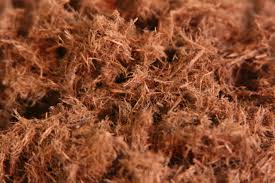


With an interdisciplinary team consisting of substrate professionals and manufacturers, economists, social scientists, science communicators, outreach specialists, and wood and biomass engineers, one critical aspect of developing a peat alternative is ensuring material stability. This requires carefully vetting potential materials and checking multiple performance criteria before they can be considered viable substitutes.
“Once we find these materials, we want to look at the stability of the materials and how they could be stabilized and be a good growing medium we want. I think first and foremost is how to manipulate the physical structure to yield good physical properties, such as air space or water holding capacity or density”, Dr. Fields said. He added that chemical properties are equally important, including proper pH, pH buffering capacity, and the absence of phytotoxicity, to ensure the materials are thoroughly vetted as peat alternatives. Dr. Altland also added that the logistics would have to work out, as these materials are moved over great distances. Growers would have to be able to generate the material and be able to sell it. “We have people in the team whose sole purpose is to keep us grounded in terms of the availability and the economic viability as a reliable source for growers,” he said.
They also discussed stratified substrates, which they have been developing for about seven years. They explained that stratified substrates allow for more precise fertility and irrigation management, leading to reduced water use and improved fertilizer efficiency. Dr. Fields described the system’s biggest advantage as its ease of preparation, using filler materials or waste products that require minimal additional engineering to add volume to containers while still providing plants with an optimal growing environment.
Dr. Altland encouraged growers to prepare themselves by testing small trial blocks with alternative media or different stratification schemes and observing how they perform in their production environments.
“Be ready have experience with this new ideas and concepts now, so if a problem arises in the future, you have options. The whole point of this is to be more resilient and have more domestic options,” he said. They encouraged growers to reach out to them if they need support in understanding or implementing these approaches.
Learn more about the soilless substrate science project on its website.
