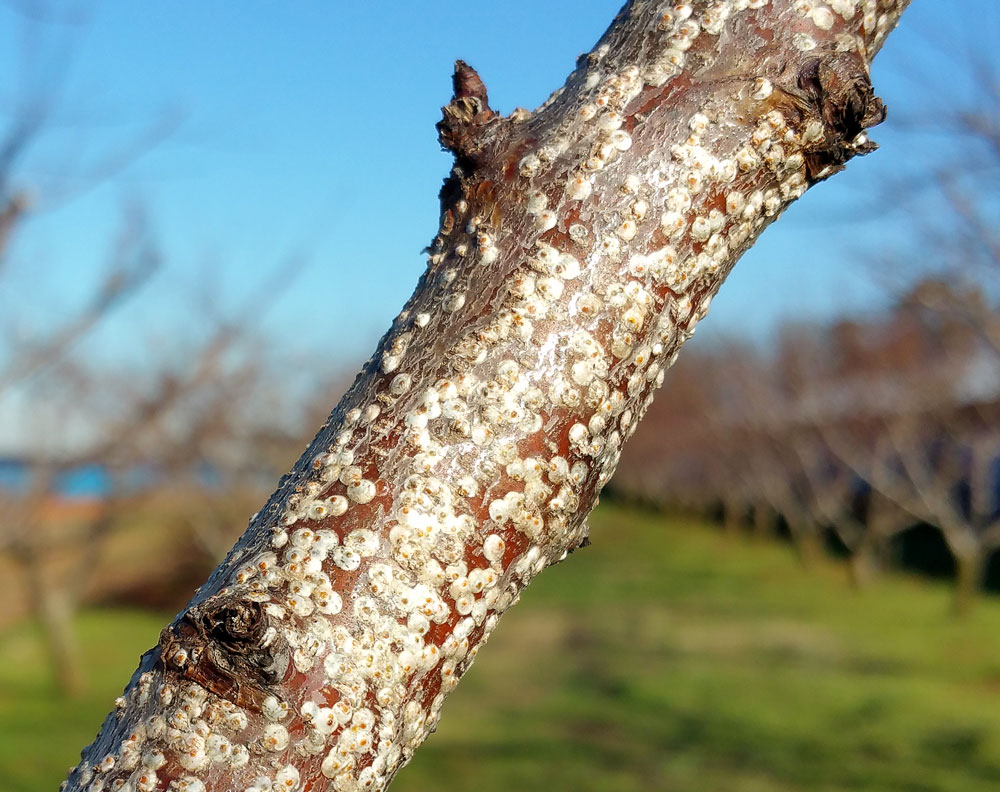
The Cultivating Tomorrow’s Orchard project was designed to create resilient IPM programs for apple and peach tree growers in the Eastern United States. These growers have faced increased economic and ecological sustainability issues in the face of a changing climate, regulatory changes and economic uncertainty. The team of researchers and Extension specialists in entomology, horticulture, economics and social science work closely with apple and peach growers, fully embedding all aspects of the disciplines in developing solutions and resolving factors that could reduce on-farm adoption of enhanced IPM programs. The team plans to build new models around the “most difficult to manage” pest complex identified through commodity groups and surveys of apple and peach growers including codling moth, oriental fruit moth, plum curculio, brown marmorated stink bug, San Jose Scale, lesser peach tree and peach tree borer and dogwood borer.



Supported by USDA SCRI (Award #2024-51181-43213) the objectives of the project are:
1. Measure the phenological shifts of these key pests and evaluate reliability of available monitoring tools and models
2. Refine IPM tools to ensure compatibility with evolving production practices, regulatory changes and climate change
3. Suppress pest populations across orchard agroecosystems with promising biocontrol agents and integral enhanced IPM tactics, and
4. Assess socioeconomic impact of enhanced IPM programs to promote grower adoption and market flexibility.
The Lamm Lab is excited to be a part of this project striving to communicate with the growers who are aware of and need support to adapt and adjust their IPM programs. The lab will be conducting focus groups at the start of the project to determine industry needs and concerns to drive the research agenda of the project team. They will then conduct focus groups after IPM strategies are adapted and developed to garner feedback from end users to make final adjustments ensuring adoption and compatibility with existing systems.