Historically, livestock farming relied heavily on manual labor and subjective assessments for health monitoring, feed management, and environmental control. Over the past two decades, the integration of sensor technologies and automated systems has laid the foundation for the current era of smart livestock farming. The emergence and development of Artificial Intelligence (AI), cloud computing, Internet of Things (IoT), and edge computing have further enabled real-time monitoring, early disease detection, and precision feeding practices, revolutionizing productivity and animal welfare. Precision livestock farming technologies address these issues by delivering real-time, data-driven insights that enable prompt and targeted management, ultimately enhancing efficiency, conserving resources, and supporting animal welfare. In this context, Precision Poultry Farming (PPF) has emerged as a transformative approach that leverages advanced technologies to optimize the management of poultry operations. PPF refers to the application of automated systems and digital technologies to monitor, assess, and manage poultry production processes in real time. PPF integrates tools such as sensors, computer vision, robotics, and data analytics to track key parameters, including temperature, humidity, feed and water intake, bird weight, behavior, and health status.
Artificial Intelligence (AI) plays a pivotal role in enhancing the capabilities of precision poultry systems. AI algorithms, particularly those in machine learning (ML) and computer vision, enable the extraction of meaningful patterns from complex datasets generated by PPF tools (Figure 1). For instance, AI can be employed to detect both natural and problematic behavior, predict growth trends, and automate grading and sorting tasks. Researchers have utilized ML models to detect natural behavior such as dustbathing and perching as well as problematic behavior such as feather pecking and mislaying behavior in Cage-Free (CF) laying hens. By facilitating data-driven decision-making, AI not only improves operational accuracy but also reduces labor costs and enhances the responsiveness of poultry management systems.
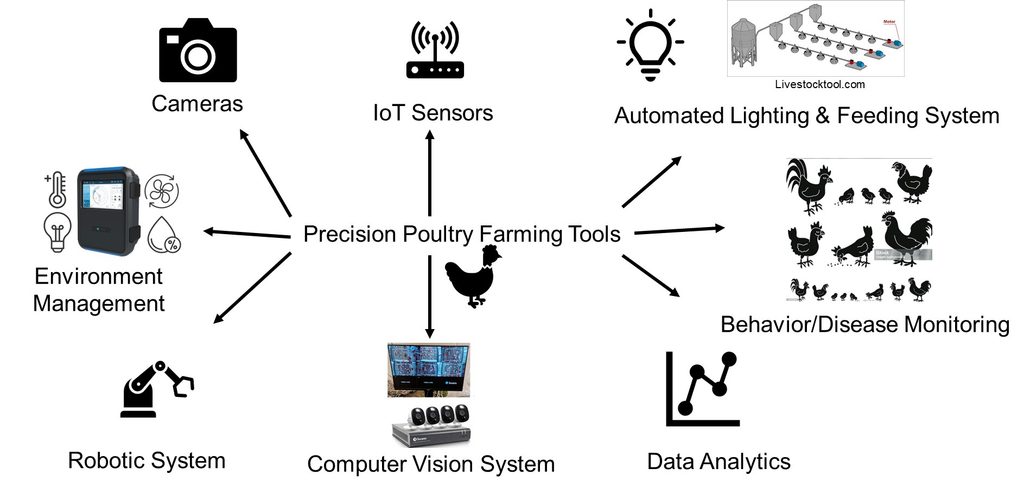
Figure 1: Schematic diagram of Precision Poultry Farming.
Key AI Technologies Relevant to Poultry Farming
The integration of AI in poultry farming is a change in thinking from traditional methods to data-driven, automated, and highly efficient systems. AI technologies enable real-time monitoring, intelligent decision-making, and predictive analytics in poultry production systems. Key domains such as ML, Deep Learning (DL), Computer Vision, IoT, and edge computing play pivotal roles in modern PPF. These technologies contribute to increased productivity, reduced environmental impact, and enhanced animal welfare. Precision poultry farming (PPF) has emerged as a transformative approach that integrates advanced technologies, including artificial intelligence (AI), machine learning, deep learning, computer vision, the Internet of Things (IoT), edge computing, robotics, sensor networks, data analytics, and natural language processing (NLP), to enable real-time, data-driven decision-making across the poultry production chain. The scope of PPF extends across multiple stages of poultry production, from breeding and hatchery operations to broiler and layer production, egg handling, and waste management. These technologies enable precise monitoring and control of production environments and resources, early detection of diseases and welfare concerns, and improvements in productivity, resource-use efficiency, and environmental sustainability. While AI has been applied to a broad range of tasks in poultry farming, this review focuses on key application domains with demonstrated relevance to precision management, animal health and welfare, production efficiency, and sustainable poultry production.
Robotics: Robotics is the interdisciplinary field that focuses on the design, construction, programming, and intelligent control of physical machines that can sense their environment, make decisions, and perform actions autonomously or semi-autonomously, often mimicking or substituting human actions to enhance productivity, efficiency, and safety. Researchers have developed and evaluated a mobile robot system capable of autonomous navigation in poultry houses to assist with labor-intensive management tasks, such as monitoring bird health and removing floor eggs. Field tests demonstrated that the robot could successfully navigate among live chickens with minimal stress to the birds while achieving a 91.57% success rate in automated egg picking.
IoT and Edge Computing: IoT involves the interconnection of physical devices that collect and exchange data via the internet. In poultry systems, IoT enables the continuous monitoring of parameters like temperature, humidity, feed and water usage, and animal health metrics through sensors and actuators. Sensors placed within poultry houses collect real-time data on environmental and physiological parameters. However, as the volume of data increases, the need for efficient processing and real-time action becomes critical. Edge Computing addresses this by processing data at or near the source of data generation, reducing latency and bandwidth requirements. This is particularly beneficial in remote or rural farm locations with limited cloud access. Edge devices can immediately respond to critical conditions (e.g., ventilation failure or abnormal temperature) without needing to relay data to a central server, thus improving the responsiveness of automated systems.
Natural Language Processing (NLP): NLP is a subfield of AI concerned with the interactions between computers and human language. In livestock/veterinary contexts, NLP has been applied to analyze unstructured textual data such as clinical veterinary reports and free-text health records. It enables automated extraction of insights, improves searchability and summarization of disease trends, and supports decision-making by converting narrative data into structured form.
Advantages of AI Over Traditional Methods
AI-driven poultry farming offers several advantages over conventional methods, listed as below:
- Real-time decision-making: AI systems can analyze vast amounts of data in real time, leading to faster and more accurate decisions.
- Predictive analytics: Machine learning models can predict disease outbreaks or performance issues before they become critical.
- Labor efficiency: Automation reduces reliance on manual labor and minimizes human error.
- Enhanced animal welfare: Continuous monitoring allows for early detection of health or behavioral issues, improving bird well-being.
- Sustainability: AI systems improve resource usage, reduce feed waste, energy consumption, and environmental impact.
Further reading:
Paneru, B., Dhungana, A., Dahal, S., & Chai, L*. (2026). Artificial intelligence in precision poultry farming: opportunities, challenges, and future features. Animal Frontiers, 16(2), 41-50.