Poultry welfare monitoring is an important aspect of modern animal husbandry, particularly in cage-free layer, broiler, and breeder production systems where birds have greater freedom of movement but are also exposed to a broader range of health risks. Poultry bodyweight is a key welfare indicator; its monitoring is critical for evaluating the growth and performance of a flock. The obtained bodyweight and uniformity of the flock are indicators of daily growth rate, feed-to-meat conversion ratio, health conditions, and marketing day prediction. The traditional protocol is to manually sample and weigh a certain ratio of a flock one by one (e.g., 2% of the flock population or 50 birds, whichever is larger. However, conventional methods (i.e., catching a number of birds periodically) is time consuming, labor intensive, and tend to increase stresses on birds. For instance, a commercial poultry house has about 20,000 – 30,000 birds in broiler houses or 50,000 birds in cage-free pullet/layer houses, it’s hard to know body weight of birds in real-time. Automatic monitoring of chickens’ body weight is important for precision poultry productions and animal welfare.
Researchers at the University of Georgia recently designed a new Internet of things (IoT)-enabled weighing platform (Figure 1) integrating load cells, an ESP32-S3 microcontroller, a Raspberry Pi 5, and Node-RED for data acquisition, processing, and visualization. The system recorded weight measurements at 1 Hz, detected individual weighing sessions, and applied a rolling-median filter to produce stable weight estimates.
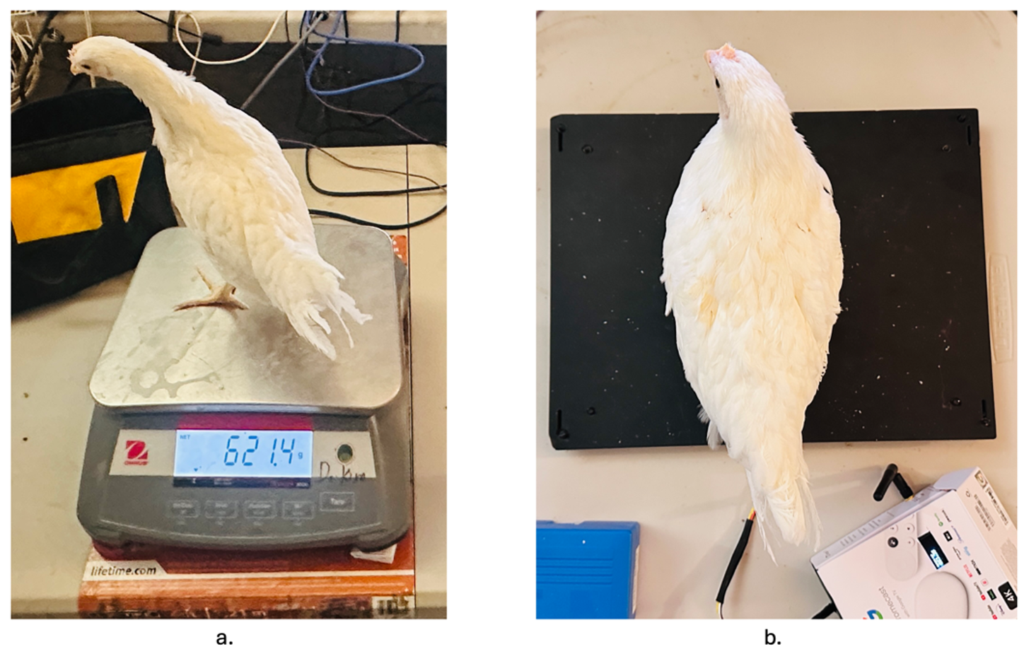
Figure 1. Measurement using standard scale and the developed scale. Both scales were placed side by side on a flat surface.
Validation was performed against a reference scale during two weighing sessions one week apart using 75 cage-free hens randomly selected from a flock of 750 Hy-Line W80 birds (Figure 2). Bland–Altman analysis and a linear mixed-effects model indicated a small overestimation of approximately 6–9 g, with most measurements falling within the 95% limits of agreement, while overall mean absolute percentage error remained below 3%. Improved accuracy during the second session suggests that platform stability influenced performance. Overall, the system demonstrates strong potential for continuous, low-stress weight monitoring in poultry farms. Future improvements should focus on refining calibration methods, enhancing mechanical stability, and integrating bird identification and presence-detection mechanisms to further support flock management and welfare monitoring.

Figure 2. Validation of the weighing platform inside a cage-free poultry facility.
This study developed and tested an automated weighing platform for monitoring bird weights in cage-free poultry houses. The system combines load-cell sensing, an ESP32 microcontroller for data collection and wireless transmission, and a Raspberry Pi for processing, filtering, and displaying the measurements. The platform successfully detected weight differences between birds and demonstrated improved performance when installed on a stable surface. Future work will focus on improving the platform’s mechanical stability, refining calibration, strengthening filtering algorithms, and addressing multi-bird events to improve system performance. Additional studies will examine how birds interact with the platform in commercial conditions, explore bird-level identification strategies, and incorporate edge-based analytics to support flock management and welfare monitoring.
Further reading: Dhungana, A., Paneru, B., Dahal, S., Song, Z., & Chai, L*. (2026). Development and Validation of Internet of Things-Enabled Weighing System for Cage-Free Poultry Houses. Sensors, 26(4), 1279. https://doi.org/10.3390/s26041279