The One Big Beautiful Bill Act (OBBBA) has changed the way U.S. Department of Agriculture (USDA) payment limitations apply to different farm business structures. As discussed in my previous article, Limited Liability Companies (LLCs) that are not taxed as C corporations and S corporations may now qualify for payment limitation treatment similar to general partnerships. [Link to my previous article]. For many producers, this raises an important question:
Should I change my farm’s business structure?
The answer depends on the unique circumstances of each operation. Before OBBBA, many farms remained organized as general partnerships because doing so allowed them to qualify for multiple USDA payment limitations. Although general partnerships are relatively simple to establish, they also expose each partner to unlimited personal liability. This means that, under certain circumstances, a partner’s personal assets may be at risk for business debts or legal claims.
With the implementation of OBBBA, eligible Qualified Pass-Through Entities (QPT Entities), including LLCs that are not taxed as C corporations and S corporations, may now receive payment limitation treatment comparable to general partnerships. While the new rules remove one of the major disadvantages of operating as an LLC or S corporation, changing a business entity involves legal, tax, and management considerations.
Changing to an LLC or S corporation may provide several advantages, including: 1) Limited liability protection for members against many business debts and legal claims; 2) Greater flexibility for business succession and estate planning; 3) Potential tax planning opportunities, depending on the operation’s circumstances; or 4) A business structure that may better accommodate future growth, ownership changes, or additional family members entering the operation. Every farming operation is different, and these benefits should be evaluated in the context of the operation’s long-term goals.
How to Change My Business Structure?
For producers currently operating as a general partnership, converting to an LLC or S Corporation is generally a straightforward process.
The process typically includes:
- Filing the appropriate conversion documents with the Secretary of State, including a Certificate of Conversion and Articles of Organization. Paying the applicable state filing fees.
- Completing any necessary federal tax elections with the Internal Revenue Service (IRS), if applicable. Ensuring the new entity qualifies as a Qualified Pass-Through (QPT) Entity under USDA rules. The entity must be treated as a pass-through entity for federal tax purposes and must not be taxed as a C corporation with the IRS.
- Updating business records with USDA’s Farm Service Agency (FSA), along with lenders, insurance companies, financial institutions, and other business partners.
Although the filing requirements are generally straightforward, the legal and tax consequences can be significant. Producers should work closely with an attorney and tax professional before making any changes.
Questions Should Producers Ask before Changing Their Business Structure?
Before changing a business structure, producers should discuss the following questions with their attorney, accountant, and other trusted advisors:
- Will changing entities affect my taxes?
- How will the new entity impact estate and succession planning?
- Will my financing, leases, insurance policies, or contracts need to be updated?
- Does my current operating agreement or partnership agreement need to be revised?
- How should ownership interests be structured among family members?
- Are all members likely to satisfy USDA’s payment eligibility requirements, including the actively engaged in farming and Adjusted Gross Income (AGI) provisions?
Disclaimer: This article is for educational and informational purposes only. Because every operation is unique, producers are encouraged to consult with their attorney, accountant, and crop insurance agent before making any changes.
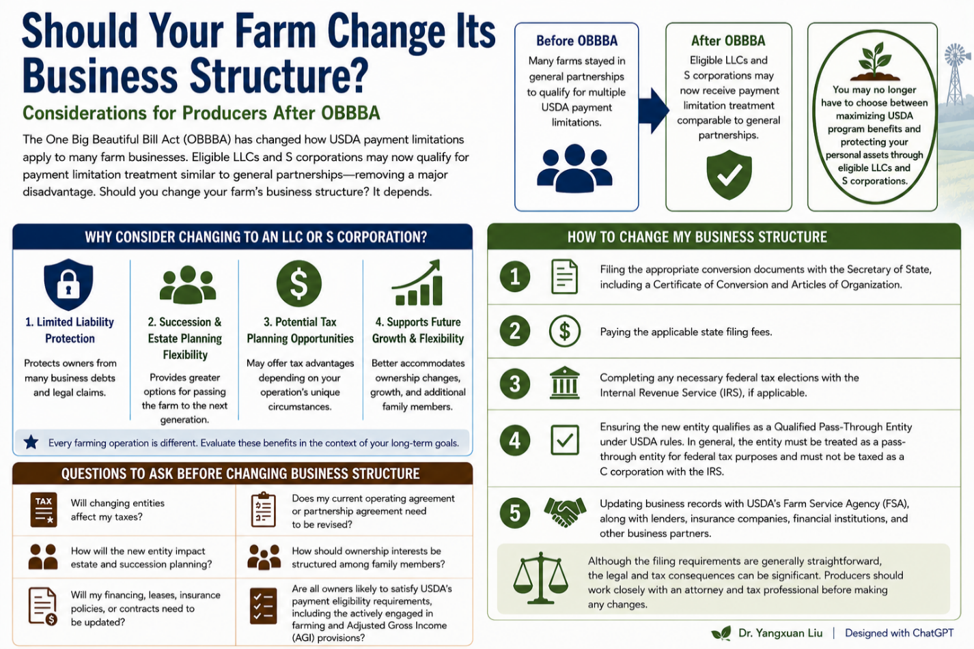
Figure 1. Should Your Farm Change Its Business Structure? (Dr. Yangxuan Liu Designed with ChatGPT).
Alternative text: Figure 1, Should Your Farm Change Its Business Structure? Itsummarizes how the One Big Beautiful Bill Act (OBBBA) affects farm business entity decisions. The graphic compares USDA payment limitation rules before and after OBBBA, explaining that eligible LLCs and S corporations may now receive payment limitation treatment similar to general partnerships. It highlights potential advantages of LLCs and S corporations, including limited liability protection, succession planning flexibility, tax planning opportunities, and support for future business growth. A step-by-step section outlines the process for changing a business structure, including filing formation documents, paying state fees, completing any required IRS tax elections, ensuring Qualified Pass-Through Entity (QPTE) eligibility under USDA rules, and updating Farm Service Agency (FSA) and business records. A final section lists key questions producers should discuss with attorneys, accountants, and other advisors before changing entities, including tax implications, estate planning, financing and contract updates, ownership structure, and USDA payment eligibility requirements. Credit appears at the bottom: Dr. Yangxuan Liu | Designed with ChatGPT.