Advancing Pest Monitoring and Decision Support Systems
Insect pest monitoring is a critical component of integrated pest management (IPM), enabling timely pest detection, assessment of population dynamics, and optimization of management decisions. Effective monitoring improves profitability while reducing unnecessary insecticide applications and environmental impacts.
The Barman Lab conducts applied research to improve monitoring tools and decision-support systems for economically important pests of pecan and citrus in Georgia. Our work focuses on developing practical and efficient monitoring approaches that support sustainable specialty crop production. Current projects include the evaluation of “Smart Trap” technologies for monitoring pecan nut casebearer moths and improving insecticide application timing in pecan orchards.

These camera-equipped, remotely connected traps allow real-time monitoring of moth activity while reducing labor-intensive orchard visits. We also investigate trap design, color preference, and placement height to improve monitoring efficiency for ambrosia beetles, sharpshooters, and other important insect pests. Major target pests in our monitoring studies include pecan nut casebearer, pecan aphids, hickory shuckworm, ambrosia beetles, Prionus root borers, citrus leafminer, Asian citrus psyllid, sharpshooters, spittlebugs, fall webworm, walnut caterpillar, nut curculio, citrus mites, and other economically important pests affecting specialty crop systems.
Our studies have identified effective trap systems for monitoring ambrosia beetles and xylem-feeding insect vectors associated with pecan bacterial leaf scorch caused by Xylella fastidiosa. In addition, our lab monitors Prionus root borer populations in pecan, blueberry, and forest systems using pheromone traps and light-based trapping approaches to improve early detection and management strategies. Ongoing research also focuses on seasonal monitoring of pest and beneficial insects in Georgia citrus systems using yellow sticky traps, vacuum samplers, pheromone traps, and other field-based monitoring tools.

Developing Sustainable and Innovative Pest Management Strategies
Our lab develops and evaluates sustainable pest management approaches for economically important insect and mite pests affecting pecan and citrus production systems. We focus on integration of field efficacy trials, laboratory bioassays, biological control, and environmentally friendly management technologies to improve pest suppression while reducing reliance on conventional insecticides.
We conduct field and laboratory evaluations of insecticidal and acaricidal chemistries targeting major pests including pecan aphids, hickory shuckworm, pecan nut casebearer, ambrosia beetles, Prionus root borers, citrus leafminer, Asian citrus psyllid, citrus mites, fall webworm, walnut caterpillar, and nut curculio.
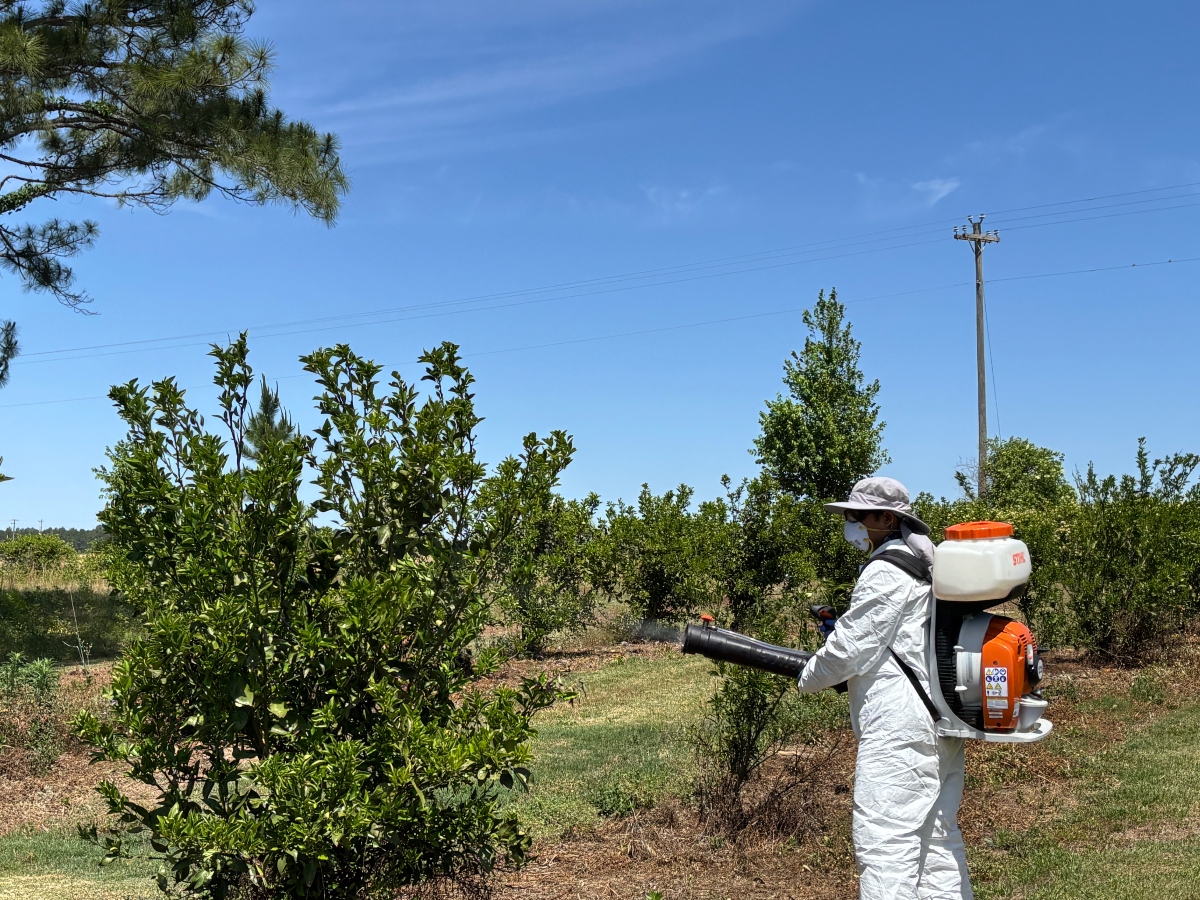
Laboratory bioassays and baseline susceptibility studies help assess pest responses to different chemistries and support insecticide resistance management by monitoring changes in susceptibility over time. Our program also investigates biological control approaches using beneficial insects, entomopathogenic nematodes (EPNs), and entomopathogenic fungi (EPFs). Current studies evaluate the effectiveness of naturally occurring EPN species and fungal species such as Beauveria bassiana and Metarhizium anisopliae against important pecan and citrus pests, including fall webworm, nut curculio, Prionus root borer, citrus leafminer, and other economically important insect pests.
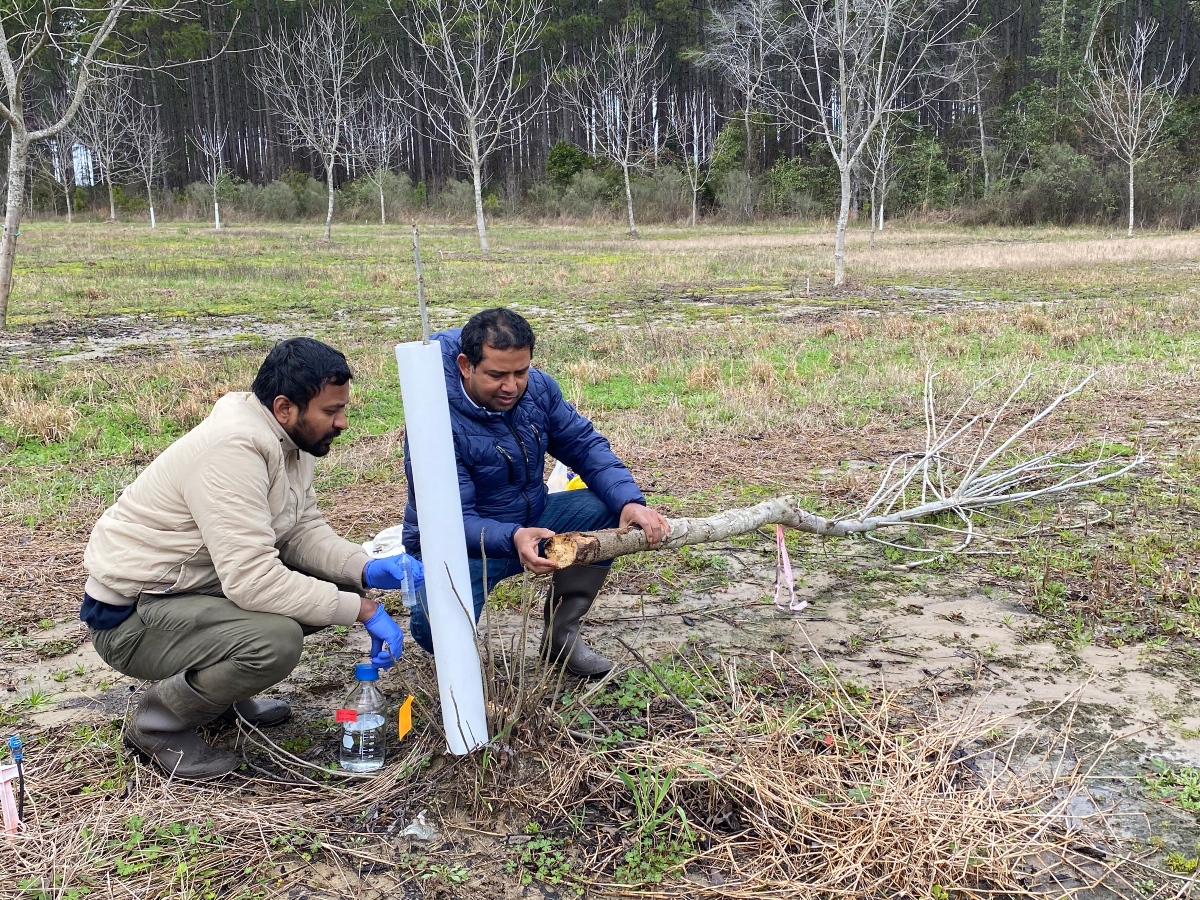
In addition, the lab is evaluating mating disruption technologies for pests such as hickory shuckworm and Prionus root borer. These environmentally friendly approaches use insect pheromones to interfere with mating behavior and reduce pest populations while minimizing insecticide use and resistance development.
Exploring Insect-Plant Interactions Through Molecular Tools
Current projects involve transcriptomic and gene expression analyses to investigate how insect feeding alters plant defense signaling pathways and contributes to host susceptibility. We also study systemic acquired resistance (SAR)- and induced systemic resistance (ISR)-associated gene expression to better understand plant immune responses under insect and pathogen pressure.
Research in the Barman Lab integrates molecular biology, genomics, and biochemical approaches to better understand interactions between insect pests, host plants, and insect-vectored pathogens in tree nut and fruit crop systems. Our work focuses on uncovering molecular mechanisms underlying plant defense responses, insect adaptation, and pathogen transmission in pecan and citrus production systems.
In addition, we use molecular diagnostic and genomic tools for species identification, DNA barcoding, molecular gut content analysis, and genetic diversity studies of pest and beneficial insect populations using molecular markers. We also investigate important insect-vectored bacterial pathogens, including Xylella fastidiosa associated with pecan bacterial leaf scorch transmitted by sharpshooters and spittlebugs, and Candidatus Liberibacter asiaticus (CLas), the causal agent of citrus greening disease (huanglongbing), transmitted by the Asian citrus psyllid.
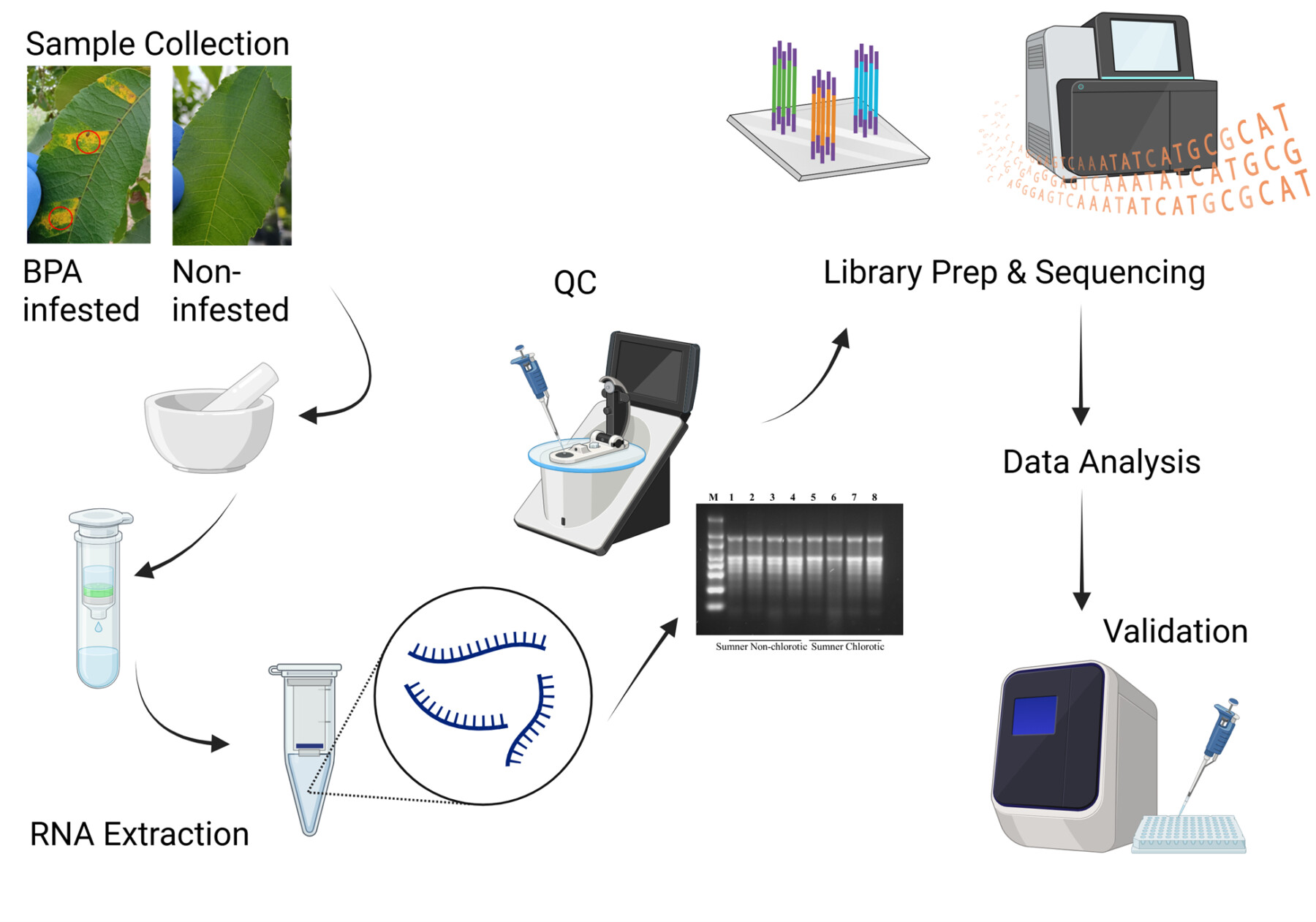

By integrating molecular approaches with applied entomology and field-based research, our goal is to develop science-based strategies that improve pest monitoring, disease detection, and sustainable management of specialty crop pests and pathogens.
Integrating Precision Agriculture and Artificial Intelligence in Pest Management
The advent of Artificial Intelligence and Big Data has brought about several modern technologies that can be adopted for insect pest management in tree nut and fruit crops. We are exploring some of the derived precision agricultural techniques such as Deep Learning, Machine Learning and UAV and remote sensing technologies to monitor, predict and develop early insect detection tools that support Georgia Pecan and Citrus growers in insect pest management.
Currently, we are developing insect detection platforms like PSYLLid, an Asian Citrus Psyllid Detection Tool. Asian citrus psyllid is an imminent threat to Georgia’s citrus industry. Active monitoring of the adult psyllids is crucial to detect their presence on the trees and control the population immediately with effective insecticides.
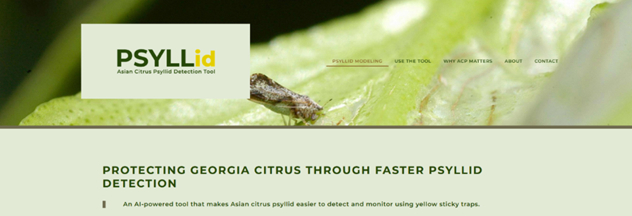
However, the size of the insect makes it difficult for untrained eyes to detect them in sticky traps. We are building a platform that enables the easy detection of Asian citrus psyllid on yellow sticky traps by reducing error in identification and eliminating the time between trap capture and laboratory detection, thus facilitating the establishment of an efficient monitoring program for the psyllids.
In addition, we are leveraging “eyes in the sky for smarter IPM”. UAV and Remote Sensing technologies are two complimentary technological tools known for their ability to detect the activity of insect pests earlier than any other method in crop production. We are exploring these technologies to facilitate early detection of insect pests in Georgia pecan and citrus production systems.
