In this episode of Urban Pods, host Ruchika Kashyap (Dr. R) sits down with Dr. Peter Konjoian, a lifelong grower and researcher, to explore the evolving landscape of Controlled Environment Agriculture (CEA) and the transition from ornamental floriculture to edible crop production. Dr. Konjoian shares personal stories from his family farm roots to his distinguished academic career, offering a unique “lab to land” perspective on the critical role of water sanitation, the delicate balance between sanitizers and biostimulants, and the future of urban food systems. Whether you are a commercial grower looking to diversify or a student entering the field, this conversation provides essential insights into the high-tech world of hydroponics and the vital importance of food safety in sustaining the locally grown movement.

Dr. Konjoian’s career exemplifies the transition from professor (University of Maryland) to commercial grower (family greenhouse) to private researcher/educator (Konjoian’s Horticulture Education Services). Dr. Konjoian observed the industry pendulum swinging back toward food production, adopting the tagline “From Flowers to Food” nearly 20 years ago to encourage ornamental growers to diversify. Dr. Konjoian’s research focuses on developing a pulsing mechanism—exposing the system to safe concentrations of sanitizers for short durations. The current finding is that this strategy is effective at reducing inoculum loads, even if not achieving 100% elimination, which is still significantly better than no sanitation.
Links to topics discussed
Transcript
Dr. Peter Konjoian
Ruchika Kashyap: [00:00:00] Welcome to another episode of Urban Pods, where science meets people. I’m your host, Ruchika Kashyap, AKA, Dr. R, and for today’s episode, I have someone special who will give us insights about controlled environment agriculture from different perspectives.
Ruchika Kashyap: When I was thinking about my next guest, I wanted someone who could bring two perspectives to the table, one from the industry and the other one from academia. Someone whose work continues to inspire young researchers, growers, and the entire controlled environment agriculture community, and with no thoughts, it was Dr. Peter Konjoian. I actually met him at the 2024 CEA Summit East in Virginia. At that time, I had just stepped into my current role, moved from California to Georgia, and I was trying to understand this growing sector and connect with people shaping its future, and I still remember his warmth and welcoming nature made me realize I was off to a good start in a developing and exciting industry.
Ruchika Kashyap: He’s a grower, but also an academic researcher. He worked in Floriculture and Ornamental, but also in edible crop production. He’s deeply rooted in the greenhouse industry, yet constantly bringing [00:01:00] the latest innovations to growers and the broader horticulture community. Through his company, Konjoian’s Horticulture Education Services, and his outreach to the industry, he’s constantly bringing cutting edge innovations to growers while educating the next generation.
Ruchika Kashyap: He also co-hosts the podcast with Michelle Kleger, continuing to shape his experiences and curiosities with others. Please join me in welcoming a true educator, innovator, and a lifelong grower, Dr. Peter Konjoian , welcome to Urban Pods.
Peter Konjoian: Thank you I’m very excited to join you on this episode and I don’t know if I can live up to that introduction. Thank you very much for it. I’ve been around the block a couple of times through my career and I’m really anxious to have this conversation with you.
Peter Konjoian: So thank you again for inviting me.
Ruchika Kashyap: I’m excited Dr. Konjoian, I must say that I’m so appreciative of you saying yes again to the podcast.
Ruchika Kashyap: I’m looking forward to learning so much, and I hope our listeners also get some insights about the controlled environment and horticultural realm. When I was doing my homework for the podcast, I realized that you just recently added two feathers to your hat. [00:02:00] One, the 2025 Department of Horticulture and Crop Science distinguished Alumni Award at the Ohio State University for bringing distinction to the department at large through your actions, commitment and leadership.
Ruchika Kashyap: And second, your podcast, the “Grower and Economist” made it to the Top 10 Small Farm Podcast. Congratulations on that. How do you feel about all this when you look back to your journey and where you currently are now?
Peter Konjoian: Very humbling stage in my career to enjoy some recognition at different levels.
Peter Konjoian: That’s not why we do what we do, but it’s always a welcome little pat on the back. My effort with Michelle Kleger, who is an agricultural economist and, you mentioned our podcast, the Grower and the Economist. We started that as COVID was setting in. We both shared a desire to help small and medium sized farmers and growers navigate supply chain disruption during the pandemic.
Peter Konjoian: And once the pandemic ended, we decided we wanted to continue and keep going. So we tried to bring timely topics, much like you’re doing today with me. [00:03:00] And it’s all about the growers. If there’s one thing that I’ve said through my career, it’s not about us, the researchers or the academics, it’s about our growers.
Peter Konjoian: And it’s very refreshing to hear you the next generation sharing in that objective. So there are too many that sometimes think it’s all about the university or it’s all about particular program. We’re nowhere. Often say, if you’re not interested in helping growers, you should be studying botany.
Ruchika Kashyap: Well, I think it is so important to bridge that gap where we wanna bring the research from lab to land and then work on research that is more applied and really directly applicable to growers.
Ruchika Kashyap: Because at the end, as you said, this is all about the growers.
Peter Konjoian: I’ve been very fortunate through my career to be on both sides of the academic, commercial growing experience. I grew up on a small family farm here in Eastern Massachusetts and during the 1960s, I remember being out on the fields with my grandfather and him speaking to me in broken English; we’re Armenian. He’d be telling me to either place the corn seeds closer together or [00:04:00] further apart. I was in grade school. And those memories, everyone has them. I’m sure you have some of your own that interested you in horticulture and plant pathology specifically. And it adds richness to all of our careers when we can connect our childhoods. For a lot of horticulturists, it’s being in their grandmothers’ flower garden out behind a house.
Peter Konjoian: So the opportunity I had after I completed my graduate work at Ohio State, this was back in 1982, I started my career as you are starting. I was an assistant professor at the University of Maryland, and I loved it. I loved every moment of it, but as my wife and I had our first child. And she and I grew up across the street from one, one another here in Andover, Massachusetts.
Peter Konjoian: When we became parents, we decided that we wanted to bring our children up with both sets of grandparents in their daily lives. So even though I enjoyed the academic world very much, we decided to return home. I was given the reins to my parents’ family greenhouse operation. So I chose to run that with them and a [00:05:00] brother.
Peter Konjoian: And we got to bring our kids up in, in the environment I grew up in, in an agriculture environment. So in the way I look back on my life. It was in essence a way for me to pay the ultimate compliment to my parents, by showing them that I wanted to raise my children as they raised me.
Peter Konjoian: There came a time where I didn’t want to waste my graduate education and research experience, and I still had that itch to conduct research. So I decided to form my education, business research and education. That was back in 1992 that I officially incorporated and the flavor that I’ve been able to bring to the table is university grade research conducted in a commercial setting.
Peter Konjoian: And that’s not always easy to do, as you can imagine. So, we had to practice, ratchet up the control, quote unquote of the research. So if I was in a commercial greenhouse running an experiment, I made sure that there were no hanging baskets hanging above the bench where I was conducting the work.
Peter Konjoian: It didn’t take long that, my academic colleagues around the country embraced the work I was doing. I happened to be [00:06:00] working with ethylene at the time and, the plant growth regulator at Ethephon. So it was a lot of fun, which could to just build this project in the private sector and be able to share it with growers at conferences.
Peter Konjoian: And that’s how I met you. And the circle keeps turning. So I am excited to meet you as our next generation. I always gravitate toward those of you who look at people like me and value the experience and wisdom that we may have acquired over our careers. And when I see someone like you welcoming what I and others can bring to the table, it makes me want to help you that much more.
Peter Konjoian: Because I remember having seen your colleagues as mentors and it’s my time now to give it back. So it’s a fun thing. It’s a wonderful industry for us all to be involved in.
Ruchika Kashyap: That is so true. You talked about the wealth, right? You talked about the generational wealth that’s passed along and then how the experiences that you have shared with your parents, you wanna pass them along to your children, and that’s not written in any books. That’s not out there. It’s [00:07:00] just, the wealth that passes along from generation to generation and the experiences and the gravity of knowledge, which cannot be found anywhere. It’s the same, I feel like in academia. That’s why researchers like me look up to researchers and growers who have that experience, which I cannot learn in any book, which requires interaction, requires coordination, collaboration, and learning from each other. That is like the gist of it. When we talk about the controlled environment industry, which is like an upcoming new industry, and it’s really growing rapidly, there are lots of things that are unknown and lots of people from different sectors trying to contribute to the industry.
Ruchika Kashyap: It can be engineering, plant production to the greenhouse structural aesthetics, but also energy and we are trying to serve a greater purpose of producing food and providing fresh local production. So I feel like shared experiences and shared knowledge is important when it comes to helping this industry together. And that’s what I am envisioning this industry to be. But moving back to the fact that you did not start in this [00:08:00] industry, right?
Ruchika Kashyap: You were earlier a horticulturist and then you switched gears to controlled environment Ag. So where did that passion come from?
Peter Konjoian: That’s a wonderful question and let’s dig into that one Ruchika, because for me it’s all goes back to growing up on a farm.
Peter Konjoian: So I started my life growing food crops. Learning how to grow food crops in the field. And, I squinted a little bit when you just mentioned you’re new to this industry because I’m not used to hearing it put that way as I get older. Another phrase I’m using more and more, ruchika, when regardless of my horticultural or agricultural audience is “a plant”.
Peter Konjoian: Meaning there are many principles of plant science that frost from nursery crops to field agriculture to greenhouse ornamentals. And having walked the path that I’ve walked, the adventure I’ve been on, I’ve had an opportunity to work in all of these different sectors. So while we like to build silos and consider ourselves either a woody plant, ornamentalist, or a herbaceous annual specialist, or a CEA. To me, it’s [00:09:00] all growing plants.
Peter Konjoian: Now understanding the distinction that you’re bringing up into the conversation and how I got to CEA, for me, starting in food crops shifting to flowering ornamentals. My mom and dad shifted from outdoor field production in the 1970s when it was becoming very difficult to make a living farming in New England.
Peter Konjoian: They shifted, saw our future in greenhouses and growing geraniums and petunias and poinsettias. So I spent most of my career on ornamental side. Then about 15, almost 20 years ago, I saw the pendulum swinging back in the other direction. And I actually called my research program, the umbrella title I used was ” from Flowers to Food”.
Peter Konjoian: So many of my trade magazine articles were under that tagline to show growers that yes, if you’re operating a garden center, to convert a greenhouse or two on your range to producing edible crops and service the locally grown movement, as you say, the farm to fork and how did you put it? The land to, uh, yet
Ruchika Kashyap: lab to land.
Peter Konjoian: Lab to land. Yeah. I love that one. I’m [00:10:00] gonna use it and acknowledge you.
Peter Konjoian: So now full circle for me, it’s not so much from flowers to food. For me it’s full life from food to flowers, back to food. So for me, it’s like a welcome home. Although CEA compared to field production, it’s okay, now we’re in the big time. This is high tech stuff that we’re talking about.
Peter Konjoian: So that’s how I got to where I am now. I still do some research on ornamental crops when those projects and experiments come to me, Ruchika, but most of my work is on hydroponic systems.
Ruchika Kashyap: I think you beautifully brought up the fact that hydroponic system is just another system, but the foundation remains the same which is growing plants, right? What differences are you seeing in terms of the research that you were doing in ornamentals versus the research that is done in kind of hydroponic or high tech controlled facilities? Are there any differences or similarities that we can talk about when it comes to the research that’s happening in these two areas?
Peter Konjoian: All kinds of things to talk about and you’re drilling down into the [00:11:00] details perfectly. We get to start off at 30,000 foot altitude talking about industry, and now we get to get into the detail and down into the weeds. As I was leaving research in ornamentals, Ruchika, my effort, the main focus of my research was irrigation system sanitation.
Peter Konjoian: And this is actually what brought you and me together. I’m very interested in your expertise as a pathologist because I am not one, around the turn of the century, back in the early 2000 knots, I was working with various sanitizers to control algae in irrigation water and to address biofilm accumulation in irrigation lines and drip emitters.
Peter Konjoian: And along with that plant pathogens as I shifted from ornamentals to hydroponics, I quickly learned that it’s a whole different ball game. And that’s where I’m looking to expertise like yours to help me navigate some of the questions and challenges that I’ve been finding. Basically, what research in sanitation is bringing us, what we’re learning in hydroponic systems [00:12:00] is because of the nature of the system, there is not a substrate surrounding, or not a physical, traditional, peat based substrate around the roots because they are in my words, naked in the water solution, whether it’s a nutrient film or a flood and drain, or a deep water culture or aeroponics, the naked root is much more sensitive to the sanitizers that we’re exposing them to.
Peter Konjoian: So we’ve had to take a step back and learn, back to square one and basically What my research in recent years is showing or pointing me toward is rather than a continuous exposure of whatever sanitizer we’re considering. We found out very early on that the roots are not capable of existing with constant exposure without phytotoxicity.
Peter Konjoian: So the strategy or the tactic that we’re exploring is pulsing a system with a sanitizer and there are all several variables that need to be ironed out. For instance, concentration of the sanitizer, the [00:13:00] duration of the pulse, how frequently we can pulse. And then what I’m looking to your group plant pathologists for in support is, okay if we can find a safe exposure for the crop, is that dialed down exposure going to be effective in controlling the algae, biofilm, plant pathogens?
Peter Konjoian: And at this point, after a half a dozen years, my answer is yes, but perhaps not completely. So I think we’re dialing down the exposure to a sanitizer. And by the way, most sanitizers can be discussed in this same conversation as plug and play, a sanitizer, whether it’s an oxidizer or, in, my case, I’m looking at a membrane disruptor.
Peter Konjoian: But I’ve had enough experience to say they all respond this way. So if we find these safe, rates and exposures, mind, we may not get 100% effectiveness, but is something that’s less than 100% still better than nothing. So that’s where, you’re going to be able to help me, identify the success.
Ruchika Kashyap: I’m pretty excited as well because when I saw your talk [00:14:00] on like water sanitation at the CEA Summit East last year and this year where you showed the progress of the work . I was honestly connecting the dots and I was like, I had all these questions in my mind on how will it work when it comes to these oomycete seed pathogens that are really water borne. Like, how can we help mitigate, I would not say eliminate them because that’s always a challenge.
Ruchika Kashyap: Like you just mentioned that it’s not a possibility, so at least we can reduce the inoculum loads and make sure that the crop is not affected and the roots are healthy enough that they can survive in smaller loads the pathogen population.
Ruchika Kashyap: But when I talk to my growers and they ask me like, how could we prevent plant pathogens? The only answer I give them is sanitation. I’m like you have to be really apt with your sanitation practices. I would say sanitation is like 90% of the job when it comes to production system like CEA, where you really wanna prevent entry of pathogens.
Ruchika Kashyap: So making sure you adopt the best management practices and sanitation practices throughout the production settings, which I understand might be difficult for commercial large scale growers because they have [00:15:00] high year-round volume of production. I guess what your thought process of adding a pulsing mechanism and a separate tank to the system for sanitation could solve that problem. I could see that being a potential success in the CEA industry, specifically where it’s like continuous production happening year round.
Ruchika Kashyap: But it also makes me think about a question that I always have in my mind when we talk about sanitation, it’s been years down the lane. We know that sanitation is important, but why are we still struggling with sanitation?
Peter Konjoian: Let’s say that is job and career security for you and me.
Peter Konjoian: I think I’ll come down on the optimistic side and just say that technology keeps advancing and we need to keep staying in pace and teaching our growers. I was very deliberate when I started my research, my private sector business. It was very important to me to have the word education in the title of my business. So it could have easily been ” Konjoian’s Research Services”. But I decided that it was going to be “Horticulture Education Services” because, and I think [00:16:00] it’s addressing the question you just asked, it’s all about how we are conveying the information, the science to our growers and being able to communicate with them. So if there’s one thing that I try to share with, let’s say graduate students, I sit on advisory committees and interact with our future leaders.
Peter Konjoian: And here you are, miss or Mr. We are teaching you how to conduct good science. You may end up in an academic track. You are going to learn how to communicate your science to the scientific community. But if you are going to interact with the commercial growers, there’s a slightly different language required. There’s a slightly different way to present the findings of research in ways that our growers can welcome it digest it, turn it into practice, and not everyone is able to make that translation, to effectively communicate to growers. Many of our colleagues look and interpret what I’m saying as I need to dumb it down so they understand it. It is not that at all. It’s simply understanding how [00:17:00] they think and digest content. And it’s not- you and I are trained to present a 12 minute scientific presentation at a scientific meeting, 12 minutes. Three minutes of questions and answers. Okay. Onto the next. That’s not how our growers are built and designed to absorb their information. So they need a little more, they need opportunities to ask questions, lean back in their chairs, think about what I might be presenting, or you compare it to what they’re doing in their daily lives.
Peter Konjoian: And I learned long ago when I first got out of graduate school, Ruchika, and started writing, I had a newspaper column and started doing more writing in trade publications. And I used to frown on newspaper writing and say, wow, there’s, why are they using one sentence paragraphs? Why, I was guilty of thinking that the newspaper writers were dumbing it down for me. Where I had just gotten out of graduate school and I’m ready to talk about statistical significance and all this detail, it took me years to appreciate that they understand how to communicate with their [00:18:00] growers.
Peter Konjoian: And if there’s one thing that I’d like associated with my name as I publish in the trade press is that I communicate with a conversational style.
Peter Konjoian: I already understand you also communicate this way. And that goes a long way in earning our growers’ trust. If we’re at a scientific meeting our academic colleagues might say, just get to the details, but it’s a different world and it’s not one better than the other or higher than the other. It’s just different and it’s what our audiences need.
Ruchika Kashyap: Exactly, this is amazing because right now in my mind I have two different directions where I want the conversation to go because it kind of highlighted two important factors here.
Ruchika Kashyap: First, the importance of science communication, which is needed. And it goes back to the fact where we were talking about farm to fork, lab to land, and we can come up with new words. But there is still that gap and that gap needs to be filled together. I like to call it like the feedback loop, where it’s like there’s no point of doing the work that you’re doing until, and unless it is a impacting the people you wanna impact. So it’s all about understanding perspectives and being open to [00:19:00] perspectives. And in order to understand those perspectives, you need to be in growers’ shoes and researchers’ shoes work towards our goal of making plant production happen.
Peter Konjoian: Let me turn that back to you now. You used the word perspective. Perspective is a word that I use often, and I’ve learned as you’re presenting, it’s everything. And welcoming different perspectives is hard. That’s difficult.
Peter Konjoian: But if we are at a point where your perspective as a pathologist is different than my perspective as a grower. How are we going, as in your words, bridge the gap and its communication. And I’ll say, I’ll tell you, growers that I’ve interacted with over my career are so appreciative.
Peter Konjoian: When we make the effort to speak their language. And I have handwritten notes and I’ve had many comments after presentations during my career, Ruchika that make it. Worth my while growers saying, thank you, Dr. Konjoian, for not speaking above our heads [00:20:00] and for speaking in a way that we can understand you.
Peter Konjoian: And again, this is not dumbing it down, it’s just packaging it differently.
Peter Konjoian: Our growers, I think anyone listening to this knows that this is sincere in my heart, that it’s all about our growers. And I am one, I’m on both sides of this fence. I’m lucky. I never regretted leaving the academic community and I’ve had opportunities over my career to have adjunct faculty appointments at several universities.
Peter Konjoian: So I’ve been able to scratch the itch. So to speak. But if there’s one thing that I’ve missed dearly, Ruchika, in having walked away from academia, it is interacting with our students. Both undergraduate and advising graduate students. That’s the one thing I miss. I don’t miss the politics. I don’t miss the grant writing challenges that you folks, your generation is facing today.
Peter Konjoian: I don’t miss any of that. But I’m at the stage where most of my academic colleagues are retiring and I’m congratulating them on their careers and their question back to me in an email, that last question is, Peter, when are you planning on [00:21:00] retiring? And I’ll respond to their email and say, why would I am having too much fun doing what I’m doing.
Peter Konjoian: I don’t have a department head or a dean telling me I have to pack up and move out. So as long as my body is willing and able, I’ll just keep doing this. I have a thousand square foot research greenhouse that I can lean over and see out the window of my office. It’s attached to my basement.
Peter Konjoian: So in the winter, I can go out in my slippers and pick fresh cucumbers and lettuce for a salad that night. I always have a corner of the greenhouse that’s dedicated to just personal crops.
Ruchika Kashyap: That’s awesome.
Peter Konjoian: So it’s a lot of fun. And again, I keep taking tangents on you and count on you to reel this back in and take the conversation where you want it to go.
Ruchika Kashyap: Well, this is amazing because the raw insights that you are providing is constantly leading to different perspectives and me as a listener as well. This episode particularly, I feel is shaping up to be not just for researchers or growers, but like the next generation as well, who might be still thinking [00:22:00] of choosing a path for themselves and or a startup grower who might be still thinking about starting a hydroponic system in his or her backyard or garage. So it kind of caters to all those stakeholders. So the next question is, what would be your insights for growers who want to start hydroponics or who want to have a new startup related to hydroponic production or controlled environment production, as well as students who want to go into this controlled environment sector.
Peter Konjoian: So let’s start with our students. We are in a much, much better place today with this question than when I was at your stage of the career you’re at.
Peter Konjoian: So if I go back to the 1980s and 90s, what we often discussed was how do we get students interested in horticulture? How can we get students who’ve grown up in urban settings interested in farming? Now, that was back in the eighties. In the last [00:23:00] decade or two, light bulbs have been lit. We could talk for hours about how we lit those bulbs, but today we’re in a much better place where many people who live in cities are now very curious and interested about where their food comes from.
Peter Konjoian: You’re mentioning CEA and advantages there. In a few weeks, I’m going to be driving across country and I’m going to end up in California for the Thanksgiving holiday. And I said to my wife, oh my goodness, I’m only three hours from Yuma, Arizona and the Imperial Valley of California, where I think it’s 80 to 90% of our national winter produce is grown.
Peter Konjoian: We’re learning that our industrial model of agriculture that started after World War II may not be as sustainable as we all think. So as Michelle and I started our podcast four or five years ago, Rica, one of, one of my comments was, how much of the [00:24:00] pie, how much of our agricultural production we grow the locally grown piece of the pie?
Peter Konjoian: And her answer was currently it’s about 3%. That’s locally grown. If we can get to double that or triple it. So she’s saying, okay, we might be able to get locally grown in CEA to be 10% of the pie. And I still can’t accept it, but I need to get my butt into the Imperial Valley in Yuma, take pictures that I want to be able to come back and share the vastness.
Peter Konjoian: The size of what happens out there. Most of us as consumers have no clue and it’s easy to criticize how we’re doing it, but you and I as scientists would take the optimistic approach to say , we just need to learn more. We need to understand more and return some of agriculture to its local roots.
Peter Konjoian: And let me tie in talking about students and getting urban folks interested in agriculture. CEA is going to be the ticket that’s going to be to help them bring or effect a change [00:25:00] so that more of their food is grown on the city limits or on rooftops in the city proper. So that’s our students, Ruchika.
Peter Konjoian: I think the future is so bright to, to have non agriculturists. Let me take a sector of growers that, current growers of ornamental crops, greenhouse production, who may be saying, Home Depot and Walmart are really cutting into my business. I’m not as profitable as I once was. What if I took two Quonsets and shifted them to CEA and I want to encourage them that the conference that you and I met at for these past two years, I’m disappointed that we’re not attracting to the CEA conference, more of the category of grower I’m describing.
Peter Konjoian: So I wanna help the organizers try and get to this population of flower growers wanting to convert some of their production. Not all of it, these are small family operations looking to diversify. Many of them used to have field agriculture, but as my family found, it’s hard to make a living doing [00:26:00] that.
Peter Konjoian: So CEAs, food edible crops gonna be a nice ticket for them. The challenge there is, when we drill down to the science and bring your pathology and food safety people into it, my advice to them, or part of the education challenge for me and for you is to teach them that food safety is a big difference.
Peter Konjoian: And when I say a plant’s a plant, yeah, that’s true to a point. But the food safety in edible crops versus ornamental crops is a new ballgame. And we need to teach them. So we need to teach them that they have to be much more diligent. Crank up the attention to detail to keep their food safe because it only takes one or two, as we know, instances where food is recalled or people get sick and it puts a real dark cloud over all of us.
Ruchika Kashyap: I am going to add another layer to it now, basically a sub-question to your answers that you’ve given me on your insights into what the students, we should do for the students and where the sector is heading, when it [00:27:00] comes to the growers.
Ruchika Kashyap: But I also wanna ask you where the sector is heading in terms of the research. So why I wanna ask that is there are so many questions and so many sectors that it can be headed to is, like we talked about, the food safety, for example. It’s an important component, but now, even though we know leafy greens are a major production area in CEA right now, but there are a lot of new avenues that are coming up, like edible flowers and a lot of growers who have not worked with edible production before they are wanting to get into CEA.
Ruchika Kashyap: So research is needed for all these areas and avenues, right? So what do you think, should researchers focus on when it comes to research in CEA? What’s your insights on that?
Peter Konjoian: Let me try and answer that in a personal way in terms of how I am seeing my research in contribution to CEA. So we’ve discussed sanitation work that I’ve been doing for almost 20 years. Several years ago I started taking on a few projects from private sector companies developing biostimulants products. [00:28:00] Many are bacteria or fungi or other, that we’re adding to a system to stimulate plant growth or mitigate stress that the crop might be placed under.
Peter Konjoian: So, most of that work has been done in traditional substrate based culture. As we enter, and these companies are all seeing a future in CEA so they’re all saying, okay, we’ve proven this in the field, or we’ve proven it with geraniums in containers. Now we want you to try it in a hydroponic environment.
Peter Konjoian: Now there are some challenges. Folks like you, pathologists, are telling people like me that not all of the bacteria are going to be welcoming of an aqueous solution, right? So the companies are going to need to screen and find those microbes that are going to thrive in water. Now me as a sanitizing agent researcher is seeing a disconnect.
Peter Konjoian: I’m seeing a cliff that we might be approaching and we don’t want to drive off of the cliff. So in, in a simple [00:29:00] way of describing it, I had sanitation research going in the greenhouse on one side, and then I had bio stimulant research going on the other.
Peter Konjoian: And many times over my career, it’s taken me standing in the greenhouse touching plants and systems and then scratching my head and saying, I wonder what would happen if, so I’m working on these two separate projects and I’m saying, okay, wait a minute. On this side, I’m trying to kill up all the microbes. On this side, I’m adding microbes. So the sanitizer isn’t going to be intelligent to know what to kill and not to kill. And I said, oh, that’ll be the title of the project “to kill or not to kill”. So I’m currently writing a series of articles, trade, press, working with, three PhD students of a close colleague of mine at Ohio State University.
Peter Konjoian: And each of them is talking about his or her puzzle piece in, in their advisor’s larger program on bio stimulants. And I’m trying to push the envelope a little bit with them in their articles in saying, okay, I’m trying to kill all of these things. What do you think we’re going to do? What [00:30:00] is the solution to the problem?
Peter Konjoian: And a couple of months ago when you heard me speak at the CEA conference, I think I’ve come up with a solution that, that I’m going to focus on for the next several years. And that’s what I’m describing as a sanitation, isolation reservoir. That’s a second reservoir in this, in the hydroponic system that is dedicated to the sanitizing agent. And if we simply plumb the system so that we can use the sanitizer and pulse the crop when we want, but then the pulse solution doesn’t go into the daily fertilizer reservoir so that we’re overexposing the crop. Is that going to be an answer to the challenge of to kill or not to kill?
Peter Konjoian: And I’m quite excited about it. I think the answer’s going to be yes. And in, in this case, Ruchika, there’s, you and I have seen many, large scale operations in our travels. We’ve seen some small family operations. Most of the time the large scale operations have the highest level of technology, but also because they’re as large as they are, they sometimes have difficulty pivoting and [00:31:00] changing.
Peter Konjoian: And adapting. So in this case, I think it’s going to be much easier for a small grower to add a second 50 gallon drum as a reservoir and be able to take up this research and cutting edge technology to growing their crops and adopting to the sanitizing and the plant pathogens and the biofilms and whatnot.
Ruchika Kashyap: Well, I think that’s an amazing way to end with a prospective research area and a research avenue that seems like can answer a lot of questions, not only in food sanitation, food production, plant pathology, but also like an answer for growers at both small scale and possibly large scale in future as well.
Ruchika Kashyap: So, Dr. Konjoian, it was so nice to hear all these perspectives, but it’s still not the end. At the end of each episode, I like to do a quick rapid fire. The only thing here is that we need to remember that we need to be super quick in our responses. It can be one word, one line answers, however you prefer.
Ruchika Kashyap: Are you ready for that?
Peter Konjoian: Do it.
Ruchika Kashyap: Oh, perfect. So then versus now, what’s one practice you used [00:32:00] to do in nineties that you’d never do now and one that’s timeless.
Peter Konjoian: Less hand watering and more, automatic watering.
Ruchika Kashyap: And what’s one that’s timeless?
Peter Konjoian: Timeless. Um, paying attention to detail.
Ruchika Kashyap: That’s perfect. Which technology or innovation have genuinely improved growing systems?
Peter Konjoian: Environment control.
Ruchika Kashyap: In one sentence, what will the greenhouse of 2040 look like?
Peter Konjoian: Beautiful. It’ll be full of fresh vegetables and herbs.
Ruchika Kashyap: Any other last words to our listeners?
Peter Konjoian: Yes, I thank you. I, this is me for our listeners. This is me tipping my cap to you. Thank you for the invitation.
Ruchika Kashyap: I do deeply and truly appreciate your time, and I’m fairly certain that the listeners would have felt inspired by your journey, your story, and your passion for learning, educating and experimenting. Thank you for joining the Urban Pods once again. I hope today’s episode left you all with thoughts about how to pursue [00:33:00] your passion and keep following it.
Ruchika Kashyap: Thoughts about looking ahead and adapting to changes and thoughts about constantly learning because I’m leaving you all with all these because our episode with Dr. Konjoian was a pack, a package of all this feelings, emotions, learning experiences and education that we just heard. And I’m feeling a sense of satisfaction being in this industry right now after talking to Dr. Konjoian even more with strong hopes for its future because of people like Dr. Konjoian in it. And with that, I’m signing off today from today’s episode. In the next one, we’ll have someone from the horticulture academic side of the industry, someone who’s also shaping the sector with her inspiring and educational work.
Ruchika Kashyap: With that, this is Ruchika Kashyap, A. K. A, Dr. R, and see you in the next episode of Urban Pods.
We value your feedback. Please share your thoughts to help us improve.

Dr. Peter Konjoian’s podcast – The Grower & The Economist
Continue the conversation with Dr. R on The Grower and The Economist podcast.

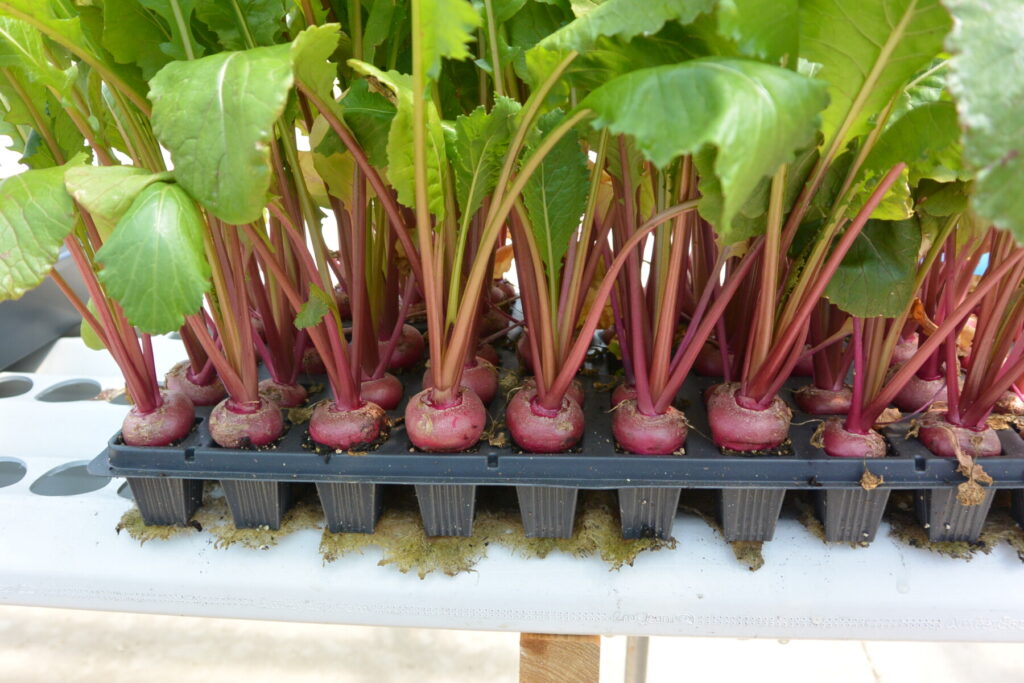
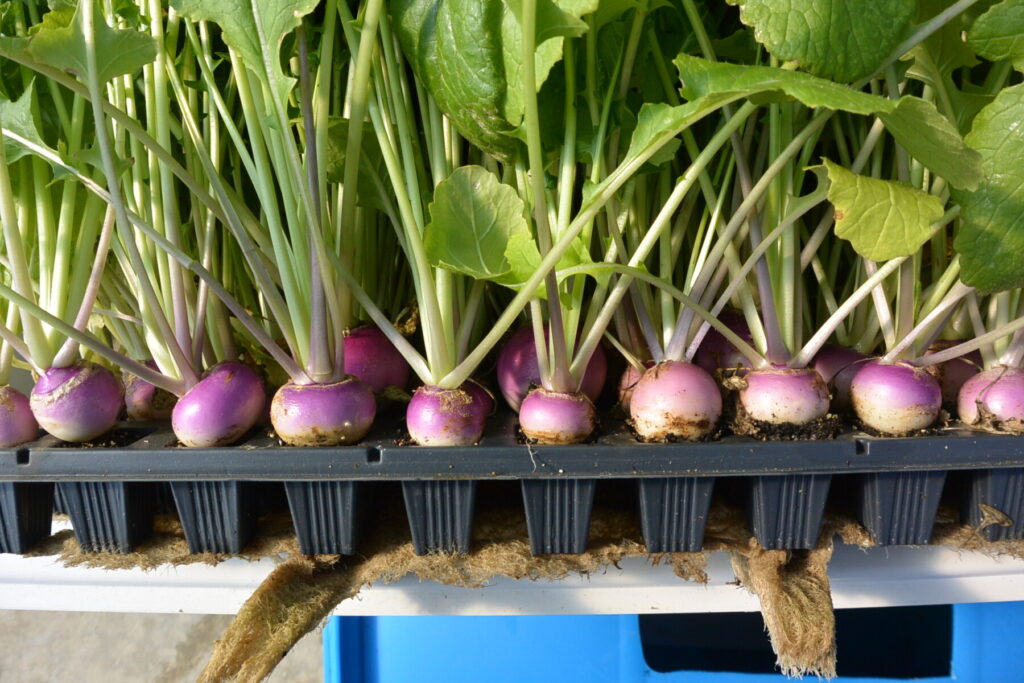
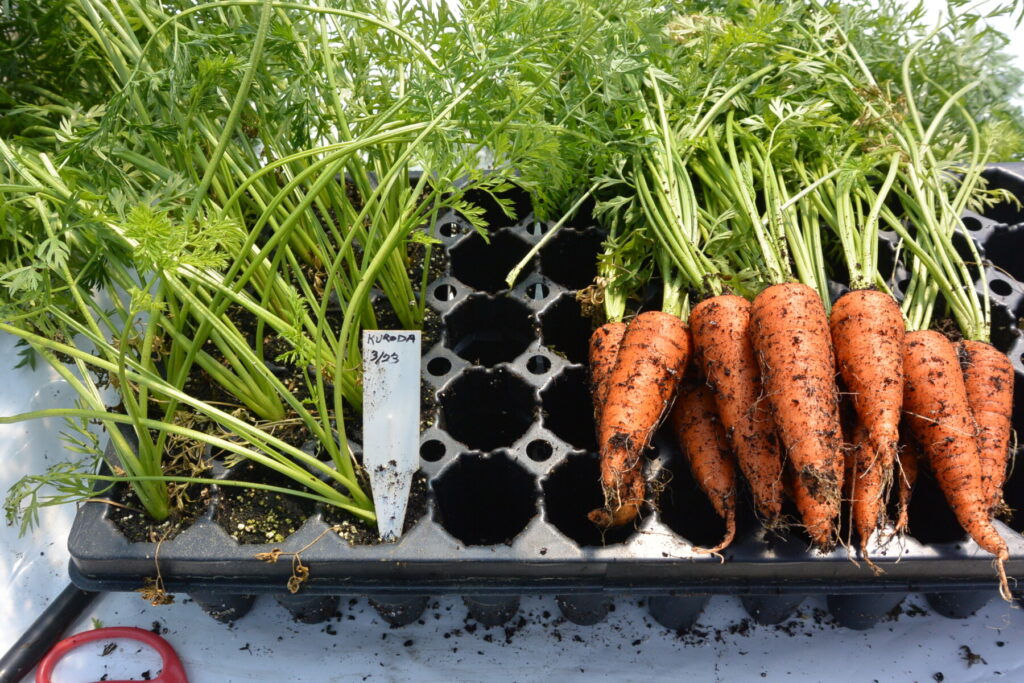
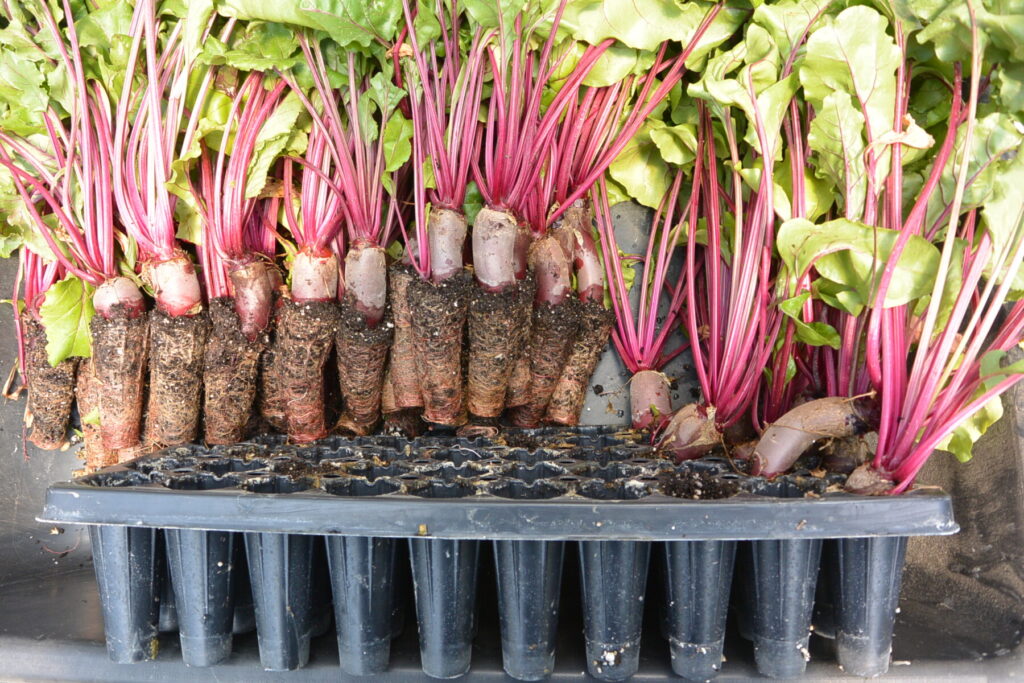
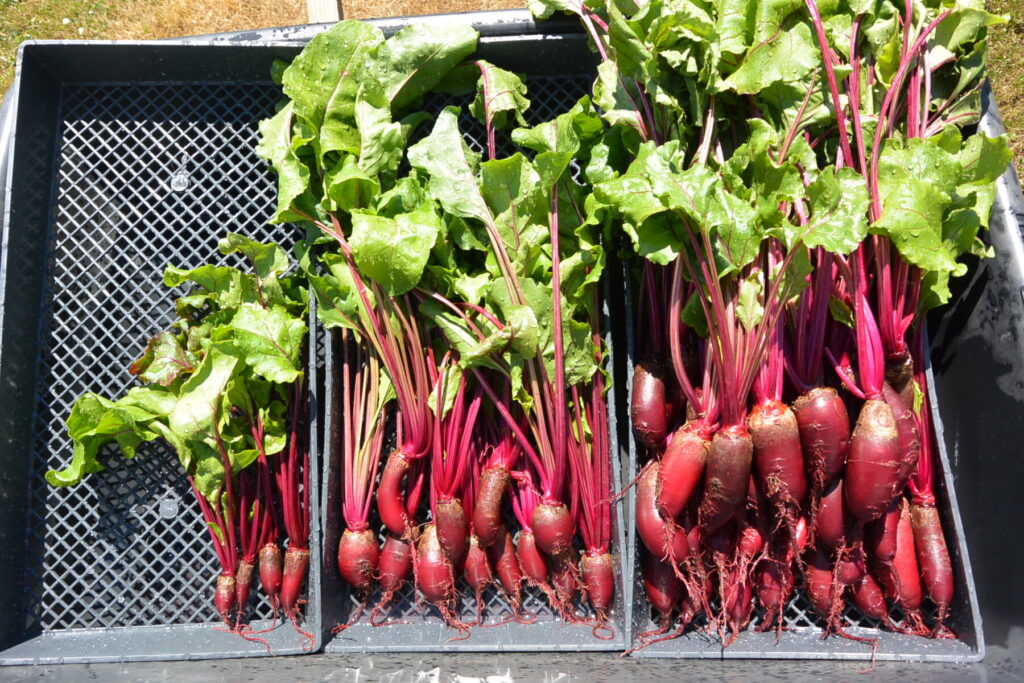
Fresh produce of radish, Carrots and Beetroots