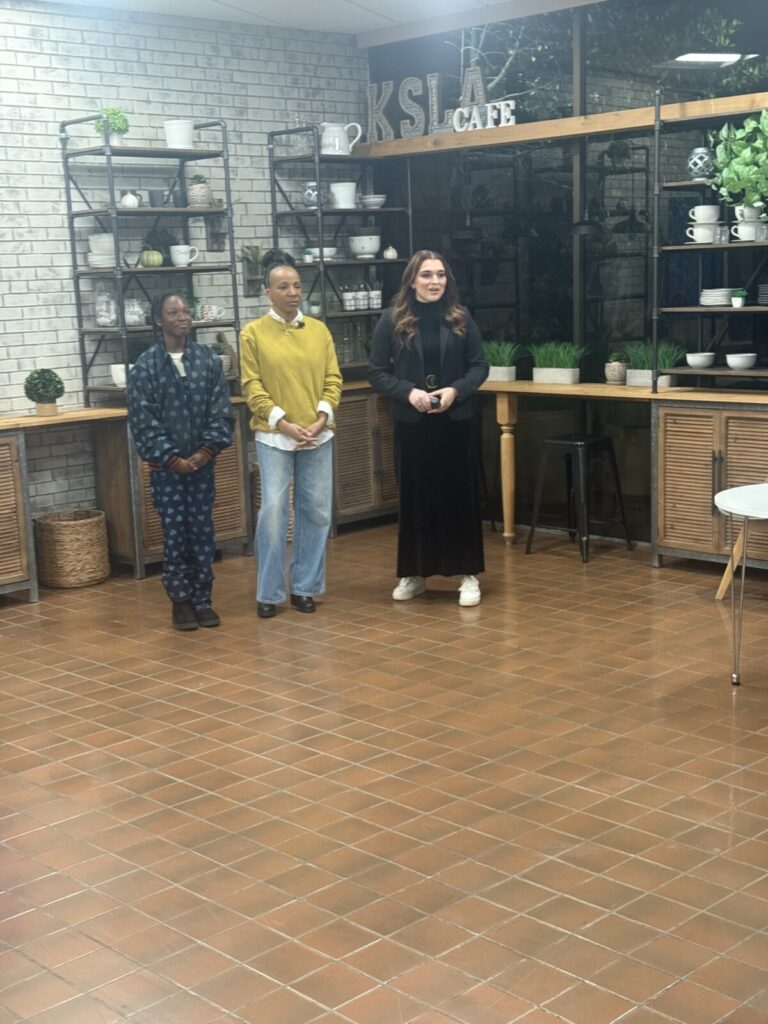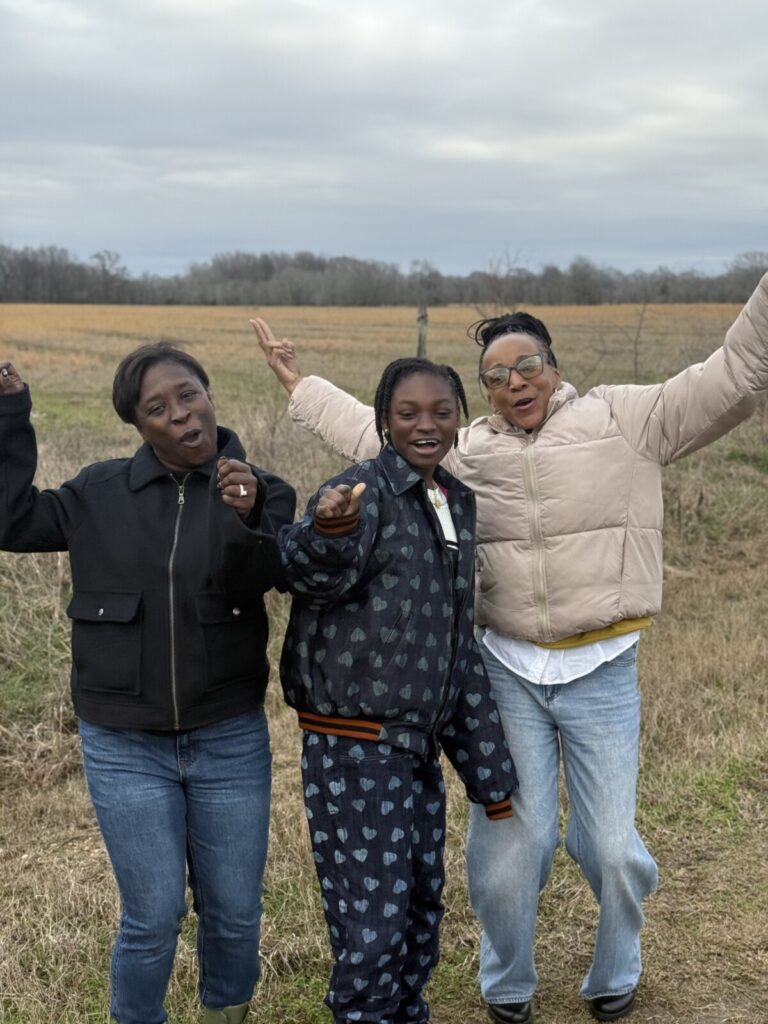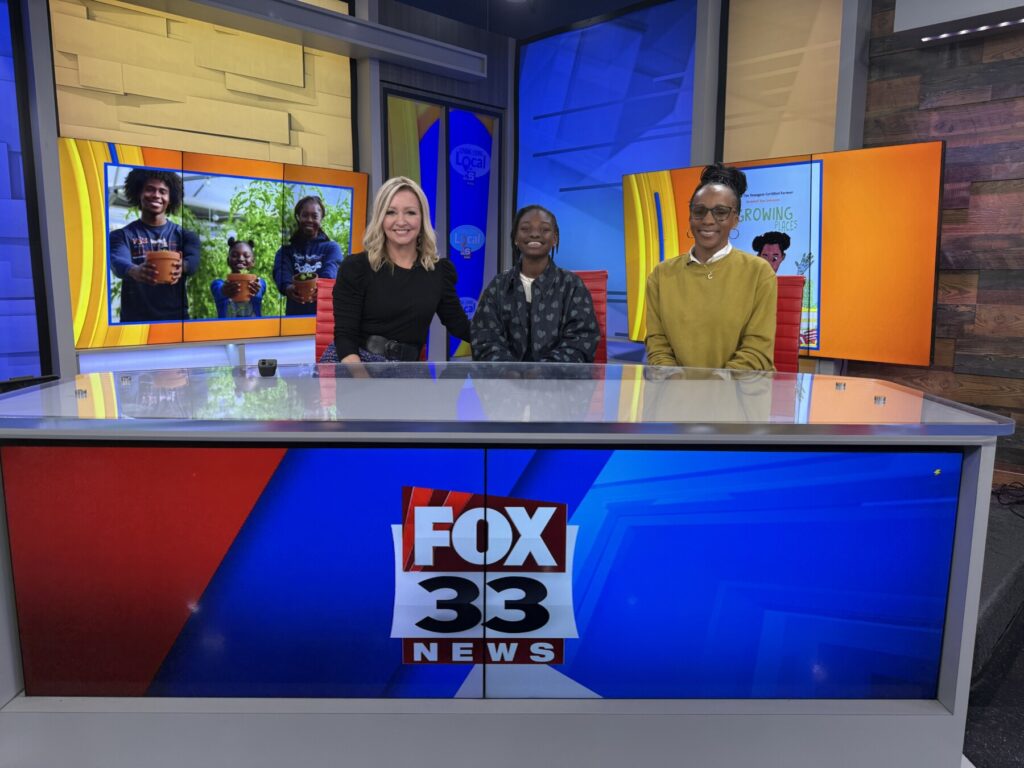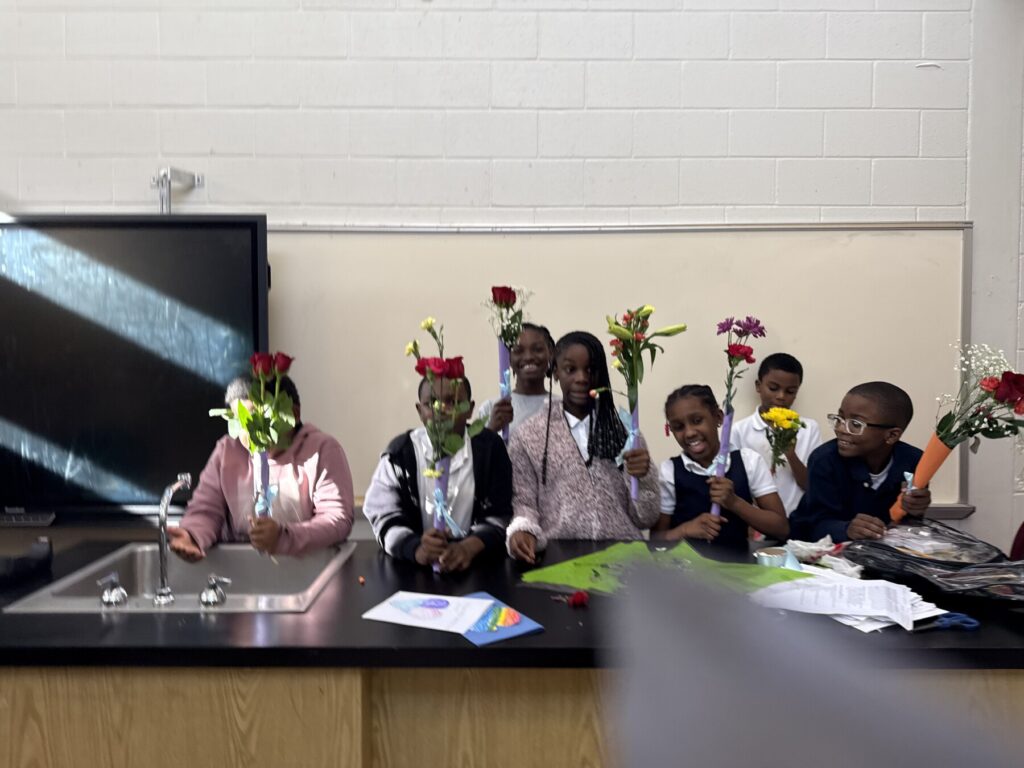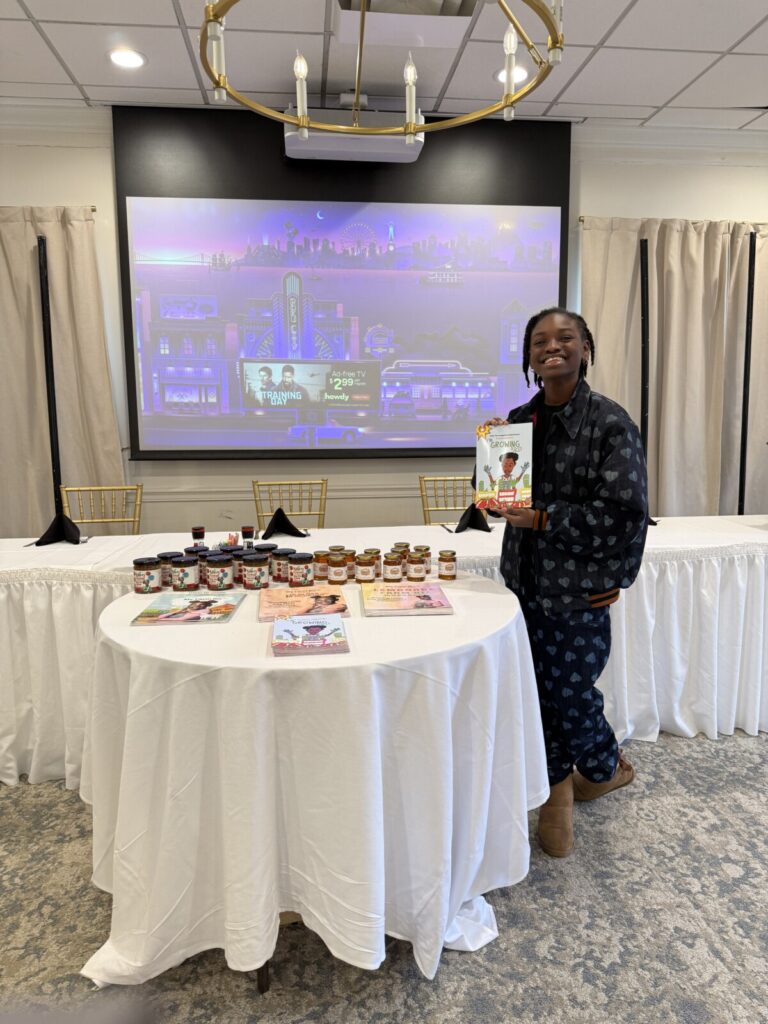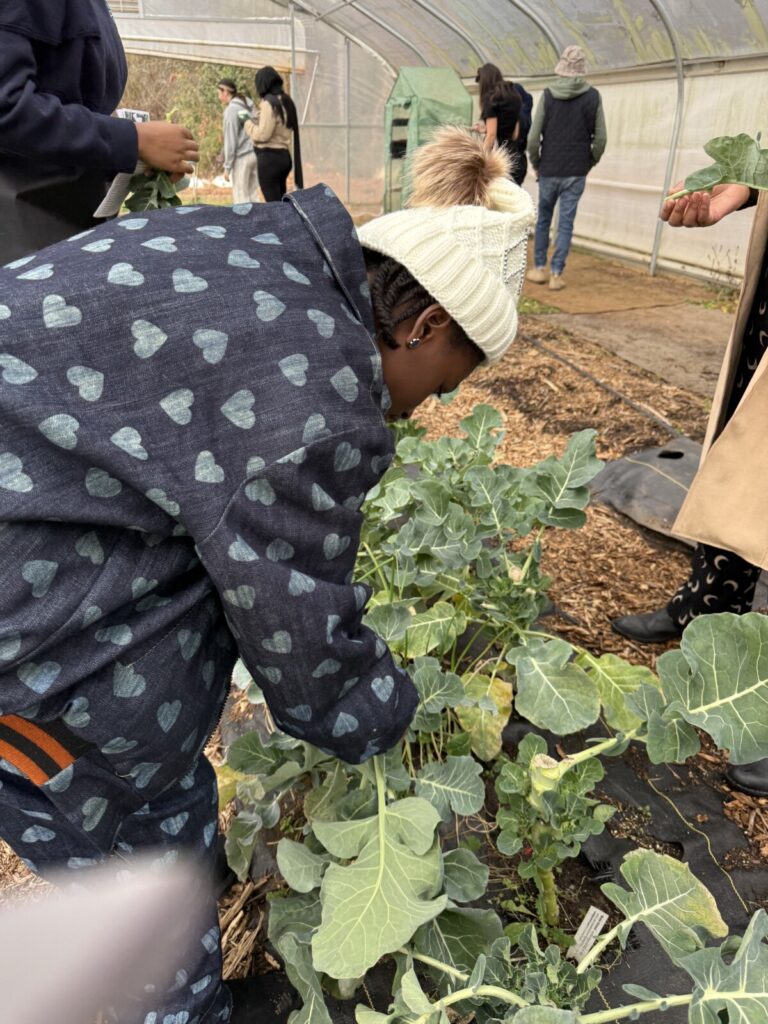
This episode shines a light on Kendall’s aGROWKulture Urban farm, a beacon of sustainability and community engagement in the heart of Atlanta, Georgia. Amidst a local food desert, ten-year-old Kendall Rae Johnson, Georgia’s youngest urban grower, the Nation’s youngest certified grower, and USDA Youth Urban Agriculture Ambassador, along with her parents, Mrs. Ursula Johnson and Mr. Quentin Johnson, are cultivating not just fresh, nutritious food, but also a movement.
Join us as we talk to the Johnson family about the deeply personal roots of their farm—starting with a family health crisis that led to a life-changing decision to move in together and grow their own food. We explore Kendall’s incredible journey, from a curious three-year-old propagating collard greens with her great-grandmother to becoming a USDA Youth Urban Agriculture Ambassador.
This episode holds a special place in our journey under the theme “Lunar Harvests to Local Plates.” It celebrates the power of local food through a remarkable success story, shining a light on Johnson Farm and the people behind it. Here, we ground big ideas in real soil, showing how vision, care, and community can transform what we grow and how we eat, even in urban areas.
In our next episode, we lift our eyes to the future, joining a NASA scientist in conversation to imagine what lies ahead and how today’s seeds of innovation may shape tomorrow’s harvests.

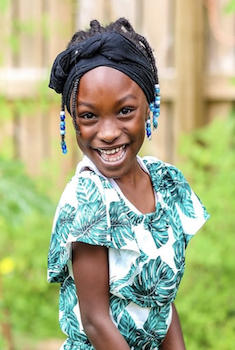
Kendall Rae Johnson, the central speaker and inspiration behind AgrowKulture urban farm, is an extraordinary ten-year-old entrepreneur, author, and agricultural advocate. She holds the distinction of being Georgia’s youngest and the United States’ youngest certified grower, a title that has led to her appointment as a USDA Youth Urban Agriculture Ambassador. Kendall’s journey began at age three, learning to propagate collard greens from her great-grandmother, and has since blossomed into a fully realized urban farm that includes beekeeping, chicken care, and selling her own products, like custom teas, at “Kendall’s Marketplace.” Alongside her parents, Mrs. Ursula and Mr. Quentin Johnson, she champions youth involvement in farming, teaching children and adults alike about sustainability, healthy eating, and the joy of connecting with nature, all while maintaining a balance between her educational pursuits, touring, and fun downtime.
Links to topics discussed
Transcript
Georgia’s Youngest Urban Grower and her Family
Ruchika Kashyap: [00:00:00] We talk about growing food on Moon and Mars, but this family farm here in Georgia is shining brighter than the stars. Amidst the heart of Atlanta’s food desert, Kendall’s aGROWKulture urban farm, Georgia’s youngest grower’s dream garden is setting the bar. At the age of nine, Kendall has achieved so much from becoming Georgia’s youngest grower to the youngest certified grower in the US. Featuring on national television, publishing ” I’m growing places”, a new autobiographical picture book, and having her own food marketplace, I’m delighted to be here today at the Johnson family’s urban farm in south West Atlanta, which is helping improve access to fresh, affordable, and nutritious food for all residents. Their efforts embody the strength of family, the value of education, and a collective dedication to creating a lasting positive impact on the world.
Ruchika Kashyap: You want to see an incredible ecosystem with ants, bees, rainwater capturing, compost piles, high tunnels, farm beds, veggies, fruits, chickens, children and adults. This is the [00:01:00] place, my dear friends. I won’t give you much information and let’s meet the family behind this, the story behind this. And today we have with us Kendall Rae, Mrs. Ursula Johnson, Kendall’s mom and Quentin Johnson, Kendall’s dad. Welcome!
Quentin Johnson: Thank you very much.
Ruchika Kashyap: I’m so excited to be here. When I first visited your farm, I was mesmerized, honestly, because I’ve not seen anything like this before in middle of a city. It’s so surprising to see, everything, what we talk about in urban farming, in one place.
Ruchika Kashyap: How did you become interested in all this and where did this thought process come from?
Quentin Johnson: I guess I can start, she was born 2015. So when she was about a month old, her grandmother and great-grandmother, fell sick.
Quentin Johnson: So her grandmother had a massive stroke, and her great-grandmother was diagnosed with stage four cancer. So we decided that we would all, in order for us to be able to take care of each other, we would all just purchase a house and we’ll just all stay together and we’ll just take care of each other until whatever happens.
Quentin Johnson: And among that journey, [00:02:00] Kendall, of course bonding with her grandparents and her great-grandmother, was a huge influence on her when it comes to, growing and stuff like that.
Quentin Johnson: But that’s like the bedrock of where we started. And, when she became of age, we built gardens and stuff like that around it. When she started on a porch, a patio porch. And then we bought that for her fourth birthday, we then extended that around the yard and made her a nice big garden around the yard that she took care of when she was like four years old.
Ursula Johnson: Yeah, spent $200 on seeds. So you had to build the doggone farm.
Quentin Johnson: She had muscadine vines, tomatoes, little citrus trees, and collard greens and carrots and blueberries, all around the yard.
Ruchika Kashyap: I wanna hear the Kendall side of story to this as well.
Kendall: Okay. When I was three years old, my Great grandmother taught me how to propagate collard greens and what propagate means taking something that was harvest and put back into the ground to let it grow again.
Kendall: And so that’s what she taught me, and I thought it was magical. So every day I would give an update to everybody in the [00:03:00] house about the collard greens, and one day it was actually growing.
Kendall: Every time when my dad would cook with fruits of vegetables, I would take every seed of his fruits of vegetables and put it back into the ground on my pile porch. Pretty soon I had a pile of porch full of fruits of vegetables that I could eat. My mom thought was a gift from my dad and has played along with it until she realized that
Ursula Johnson: I think she was learning about it. Like we had no idea about these words for gardening and growing. We are learning right along with her.
Ursula Johnson: But that’s the basis of how she was introduced. Great grandmother teaching my husband how to cook collard greens the way she wants them. Most people would just throw the base away and so Kendall was like, nah. Granny said don’t throw ’em away. You can put ’em back in the ground.
Ursula Johnson: So anything that she could find out if it could grow, she was just curious. Can it grow like this? Can it grow like that? And every seed that she would find, she put it in a pot somewhere.
Quentin Johnson: Even sometimes it even, it wasn’t a seed.
Ursula Johnson: She thought it was a seed that would put it in there.
Quentin Johnson: But that’s how we got involved. She would ask questions. We weren’t [00:04:00] growers at the time and we didn’t know a lot about anything, any horticulture, none of these words. So, we had to learn like what this bug and why do the leaves look like this? What’s going on? why leaves wavy?
Quentin Johnson: Why they got little yellow dots in them, like, we didn’t know anything. So when she would ask the questions about stuff, we’d have to go look it up.
Ursula Johnson: YouTube!
Quentin Johnson: So YouTube became our friend, and then we found out that YouTube’s not a very good friend.
Quentin Johnson: Yeah some YouTube is okay, but, it doesn’t have good advice. When we started trying to get, better advice on how to grow things, then we started turning to people at the universities and stuff like that to try to give us better advice. And they did give us better advice.
Quentin Johnson: Some of the things that, we took on, cause we have a lot of kids over all the time. Cause like even from when she was like three or four years old, when we had that garden, we knew that we couldn’t like spray chemicals and stuff like that because her friends would shop in the garden.
Quentin Johnson: So her friends would come over and they would have their little playmate shopping cart. Playmate Fisher-Price. Yeah. Shopping carts.
Ruchika Kashyap: And look, what that $200 that you spent brought you, right?
Ursula Johnson: Yeah. I can’t complain about the $200 now, but it did make [00:05:00] me mad.
Ruchika Kashyap: But if it turned out is like this Kendall, right? It’s worth it, right?
Kendall: Yeah. It is worth it. Spending all that money for seeds was worth it.
Ruchika Kashyap: You were talking about children come to your farm and they tour and they try and learn something. So what’s your vision for this?
Quentin Johnson: Yeah, so one of the best experiences I think we had was when, we had a camp come through. It was about, maybe about 40 kids. And they came through and they had been on field trips, like three or four field trips that summer. And they said they loved coming here the best because they got to pick fresh fruits and vegetables, learn about like, the worm composting, and they got to actually taste what they picked,
Quentin Johnson: We offer, a, service where we have chefs come out to prepare whatever you pick. So the chefs come out and they give the fruits and vegetables to the chefs. The chefs made ’em a dish and they was just blown away by, what they could eat.
Quentin Johnson: The chefs taught ’em little things about how they can prepare what they picked. And they were blown away. They had a great time and they all said this was the best place that they visited.
Ursula Johnson: The kids came, that was one of those special times where the schools said, you know what? We’re gonna go all out [00:06:00] because we offer, schools, camps, organizations, whomever, people in general, they can come to the farm and do a farm tour. Farm tour usually lasts about an hour.
Ursula Johnson: If Kendall runs her mouth, it’ll last an hour and a half. But we give them that time and then we ask them, Hey, would you like a beekeeping experience? Would you like a farm to table experience? What type of activities are your kids excited about? Let’s bring what they’re excited about and implement that on the farm so they have something that they’ve never seen before.
Ursula Johnson: They have something that they’re used to, to bring it all together, to tie it up in a really pretty bow. And that makes the experience worth, like , their faces lit up. Matter of fact, yeah, we still had strawberries. , They were like. Can I eat this strawberry? Can I eat that strawberry?
Ursula Johnson: And Kendall would go and say, Hey, if it has a hole in it, that means a bird, a worm or something has gotten into it. So don’t eat that but if you look all around it, and there’s no holes, no ants, no anything. Go for it. And , they were out here for so long trying to find all the strawberries that they could possibly eat.
Ruchika Kashyap: You know what, Mrs. [00:07:00] Johnson, in Ag extension, learning by doing and seeing is believing you are actually applying those in your farm. Children, kids, whoever comes to your farm is learning by actually doing stuff. And they believe what you’re doing when they see your farm here.
Ruchika Kashyap: You have lots of things going on, and I’m super amazed, how you have adopted those practices in day-to-day lives and included communities in your setup as well. That’s amazing too. So do you have a memory of a tour?
Ursula Johnson: One of my favorite memory is before all of this happened. We were taking care of my mom and my grandmother, we actually didn’t have that property anymore and we moved into my grandmother’s Kendall’s great gran’s property.
Ursula Johnson: She started to cry about whether or not we were gonna grow. A big oak tree fell. And I’m talking about it fell across three houses. Our neighbor on the left, our house, and the neighbor on the right. We didn’t have any money like we were trying to figure out because she kept asking questions of, are we gonna grow anything over here?
Ursula Johnson: We had to figure out how to cut the tree up, but that [00:08:00] was the most fun part about the beginning of what it looks like now is the process, right? Us saying that, I’m looking at my husband and I’m like, how are we going to get this farm the way that she wants it.
Ursula Johnson: We gotta cut this big log. Chainsaws up. We went the extra mile and said, okay, we’re not gonna pay anybody to cut it up. We’re gonna cut it up ourself. But what happened in that process is we made bonfires basically. And what do we do in the bonfires Kendall?
Kendall: We made s’mores. It was a great time. The dogs was run around and eat some of the
Kendall: marshmallows. And was the best time ever. I wish that we could do it again.
Ursula Johnson: That was like a really special time and bonding time for the family. To say, Hey, we are just gonna go for it. Nobody at that time was helping us figure it out. We just had to put our brains together. And say, first things first, we’re gonna cut up this log as much as we possibly can.
Ursula Johnson: And then secondly, she designed how she wanted it to look. So, it was a process, I believe is gonna be one of my favorites [00:09:00] because I look at the farm, now we know where we want to go, but the innocence and the hope of where we came from and the humbleness of where we were, like to just not knowing anything.
Ursula Johnson: Now we have a sense of idea of what we want to do, how we want to do it.
Ruchika Kashyap: It’s basically staying with your roots, but also shooting for the stars. And every story that you’re telling me is an inspiration, because lot of people, when there are uncertainties they give up. Or there are hardships. There are challenges in their lives. They gave up. Yeah. But your farm and, you know, because it was passed on from great grandmother. Oh my God. Four generations, together building this community is an inspiration for millions, especially in times of, COVID, happen two years ago and everybody was like, we need something to eat. And today is another example. It was a winter storm yesterday, January 21st. Yeah. And then while I was driving from Athens, it’s like, stores are closed.
Ursula Johnson: Closed, right? So if you didn’t go to the grocery store, we dunno what you’re gonna eat.
Ruchika Kashyap: So you never know when these [00:10:00] uncertainties will come, and then staying humble and staying closer to your roots is what your farm is teaching what do you wanna suggest the youth, who want to be a part of farming? Because what I’m seeing and hearing is, youth wants to stay away from mud, you know?
Ruchika Kashyap: It’s like farming is considered as a muddy job. But you’ve involved Kendall since she was like three years old. So what are your thoughts on this and how do you see future of urban farming? Because yes, I’m seeing youth staying away from mud, but I am seeing right in front of my eyes future, like Kendall, working towards urban farming.
Ursula Johnson: So, Kendall, do you have something that you wanna share to the youth?
Kendall: Keep growing The earth relies on it.
Quentin Johnson: I think that we have to meet kids really young. To destroy the stigma of it being a non distinguished job, because the most important job is the farmer. Because the farmer is the one and nobody eats without him. Or her, [00:11:00] sorry. No, nobody eats without the farmer. Let’s say it that way. And if you become the farmer yourself, meaning you, you grew an urban garden or you doing something small to reduce your reliance on the grocery stores and you’re getting more healthy, more tasty food right at the house. What I’m saying is, I think once kids get a little older, they’ve already have this mindset of these are the type of jobs or the type of careers or the type of work that’s acceptable in society, and these are the type of jobs that are not.
Quentin Johnson: And the farmer is on that. That’s not because it’s portrayed as this terrible hard work and back breaking sun and, it is like being a roofer, but growing food. But, I think the difference in it is now the technology is at a level that we don’t have to just sell this picture of picking and planting and stuff like that by hand anymore because there’s plenty of technology out there where you can be involved in agriculture in a productive way [00:12:00] without all the thoughts of struggle and stuff like that entwined with it. But I think that’s more for the older kids.
Quentin Johnson: But for the younger kids, they still love mud.
Ursula Johnson: Yeah one of the things, that I think would be great just to see kids do, the kids have the vision. But we are parents. It goes back to the parents. Because if we don’t watch our kids, we don’t understand our kids, we don’t accept the things that they do, we’ll never know what their dreams are early on to help them grow those dreams. And I think that with agriculture , and Kendall, and us, we ask the question, Hey, is this fun for you? If it’s fun for you, okay, let’s figure out what’s so fun about it and let’s figure out the dream from there.
Ursula Johnson: Again, like my husband said, agriculture is just not picking. At the moment, that’s the fun part for Kendall. She wants to see it grow. She wants to pick it, but we’re even moving forward into future agriculture. What I see for the future is learning. [00:13:00] Especially these businesses and these kids who are in a teenager space now that wanna do hair, these kids that wanna do clothing design. But what do you think the cloth come from? What do you think the grease come from? Let’s go back, let’s take a couple of steps back. It ain’t just coming from , some oil that you can get off of Amazon, some shea butter blocks that you can get off of Amazon. It goes all the way back to the farmer.
Quentin Johnson: We try to encourage those kids that are at that level they’re in high school and they’re trying to, start their own businesses and trying to see where, which way they want to go with it. And, all of it comes back to agriculture and we just encourage them, along the way, just investigate where these things come from because you may want to be owner and part of the in, earlier parts of the process. You might wanna own some kind of textile, place where it just coming in from the fields , and if you own more of it, you can…
Ursula Johnson: Expand, you can get other people, other kids like you on as well. What is the saying? We can’t make more land. But we could do multiple businesses. So as a teenager, if you were to really find out what you want to [00:14:00] do, and you were able to relate that back to agriculture because agriculture is everything. And was able to use the resources to get a plot of land. Not a whole lot- a plot. To just learn how cotton is made. Go visit a cotton farm. Don’t mean you gotta picket, don’t mean you are a slave, but just go visit and see how it grows. You know? How do the cotton ball from the plant get to the manufacturer. How do they stretch that cotton out to create, strands in fabric. Know the process. Everybody like denim. But you don’t know the process. We found out by going to the cotton field this year for event that cotton is money.
Ruchika Kashyap: It all boils down or comes down to the fact that don’t nip the curiosity. You’re not nipping Kendall’s curiosity. And letting her dream, letting her ask questions. And this curiosity will help us in this times where we have limited land. And urban farming is an example.
Ursula Johnson: Is an example you can have a [00:15:00] farm from buckets and pots.
Quentin Johnson: I’m gonna give an example. We fed a lot of people off our patio. What was it, three, four crops? Cucumbers. Tomatoes. what else? Maybe some greens. peppers.
Ursula Johnson: Yeah. our neighbors were like, don’t give us nothing else. Cannot eat no more. Of what y’all got going , on this patio of four or five pots, Atlanta is the food desert. And that’s why, for one, with our farm, we are a producer farm and a educator farm. We want her to understand that agriculture is a business but we want to also have her to understand that when people don’t have it, it’s okay to give.
Ursula Johnson: It’s okay to share the information to other youth that are like you, other community members, if people don’t know where their food come from. If they always gotta turn the box over and read the ingredients and don’t know what it is, that might not be for you.
Ursula Johnson: You know what I’m saying? Yeah. Know where it comes from. Find you a local farm, find you a local farmer, get to know their practices. you will feel better about the choices that you’ve [00:16:00] made that goes back into your body.
Ruchika Kashyap: And the tours that you’re doing are helping to connect the community.
Ursula Johnson: The community. Yes. And it also introduces those, not just the kids though, the parents, because we had an event, I think it was with Nickelodeon. They came and we had about 20 kids out, right? And the kids were out there pulling up beets and carrots. Now mind you, at this point we didn’t have no washing pack station and all of that good stuff.
Ursula Johnson: So they were doing just like Kendall- tapping it on the thigh, farmer dad would take his knife and scrape a little bit off the top. But they were eating it straight out the ground. And when we asked them, so how does it taste? They was like, oh, this tastes good. We don’t get carrots like this in the store.
Ursula Johnson: Very sweet, it was. Even when they come and taste strawberries, and I’m like, does this strawberry taste different than the one you buy at the store? They was like, yeah, this is good.
Ursula Johnson: There was a parent, the kid was in the back part of it and she was like, I’ve never tasted okra before. And my husband was like, oh yeah, you could just eat okra off the stalk or whatever. He was like, but you gotta find the little one. [00:17:00] Man, she got that dog on one. She was like, you got any more little ones?
Ursula Johnson: Just the curiosity, not for just Kendall, but for other kids and then their parents because their parents didn’t know that they could do it too. So then now the parents are curious about, can I just eat it like that? You didn’t do anything else to it? No. We don’t have any pesticides and herbicides on the farm.
Ursula Johnson: You can eat whatever you want, right off the farm.
Ruchika Kashyap: Yeah. And then what time of the year do you have these farm tours?
Quentin Johnson: Mostly from June through September? Sometimes in October depending on the weather, what the weather’s Yeah. We try not to keep it cold in October, October we’ll have like plenty greens out, we’ll have lettuces out, we’ll have squash, onions, all kinds of stuff. So carrots, beets.
Ruchika Kashyap: Yeah. I did see your tree bees and your rainwater harvesting concepts during my last visit. What are your plans for incorporating those new things that you’re developing in your farm?
Ursula Johnson: I think for the rainwater catchment, system that we have, my overall goal is to show our communities that you don’t necessarily have to have a 10, 20, 30, 40, 50 acre farm.
Ursula Johnson: You can do it right [00:18:00] here in your backyard. You just gotta have a plan, but also show them that you don’t have to operate your farm from the resources of the city. You know what I’m saying? They’re solar power for a reason. We are not saying cut it all off; keep your house the way it is, but the more you add to your farm, the more your bill goes up with your house.
Ursula Johnson: Right. You know? ’cause that farm is now attached to the house. So it’s a lot of water. There’s a lot of, at nighttime, lights, it’s a lot of moving parts. And so what I would like to see, our farm to be the model for other farm and garden enthusiasts to say, that’s a great idea. Okay. So the rainwater catchment over here, it, funnels all of the water for the farm, like for, and you can have many setups that farm, that water certain parts of the farm, where you don’t have to use the city water to do the solar, we want the solar to be able to power all the tools that we use on the farm.
Ursula Johnson: All the lights, that happens on the farm. Like anything that has to do with the farm, we want it to be powered by solar. That’s sustainability.
Ruchika Kashyap: [00:19:00] Yeah. It’s a perfect model of sustainability, teaching people that you can be sustainable. We are in hard times, we are shooting for Moon, we are shooting for Mars. Resources are limited here. We understand that, but we wanna work towards something. You wanna work towards creating that sustainability for our future generations as well. Yeah. And then your farm is an example of having an ecosystem. And when I talk about ecosystem, it’s not just creating resources, but creating a microbiome and biodiversity. I’ve seen bees there, I’ve seen insects crawling. I’ve seen chickens. So it’s not just one aspect of farming, right?
Ruchika Kashyap: But it’s a community and biodiversity.
Quentin Johnson: And that’s one of the things that we learn the most when it comes to, growing is, especially in a garden setting. ’cause a garden setting is better than the, I don’t wanna say better, but I
Quentin Johnson: wanna say is, more sustainable than Monocropping because, in the urban setting, you have to do like a garden set. You don’t have to, but it’s better to do a garden setting and it, [00:20:00] you can take care of it because it’s not a lot of land. If you have monocropping, you have to spray, you have to do all these things because it’s hard to keep up with that many plants with just going out every day inspecting.
Quentin Johnson: But in an urban setting. You, it’s not a lot of land, so you can literally touch almost every plant every day, and having different plants, having different trees. Like we have these, what they call those, the sweet gum trees. We have, peach trees, pear trees, plum trees, all these different trees. Different herbs that we put out. We put out different flowers and we just put out a lot of different things in the garden to attract diversity of insects , and stuff like that so they can level each other off. You know what I mean? Yeah. So we don’t struggle with an infestation of one thing.
Quentin Johnson: That bug eat this, so they, it all, they keep each other’s numbers in check because we put so many different type of things out. Like, we might grow a ton of collard greens, but with those collard greens, we might, drop some flowers with ’em, or we might drop some, some onions or some basil or something, we just, we don’t [00:21:00] just, what do they call that?
Quentin Johnson: Companion? Plant Companion. Yeah. So we companion plant a lot so that. We can fight off the deer and at the same time we can attract different bugs that can, I said, things at bay.
Ursula Johnson: You’re in urban settings, you can’t get rid of the birds, right? Like the birds are coming, people always ask, so y’all don’t have a whole lot of fruit just damaged from the birds? We have some, yeah. There’s very little, ’cause they don’t do a whole lot. We see birds on our neighbor streets. they come in, they swoop, they find they worm, they bug, and they disappear.
Ursula Johnson: They rather the bugs and buzz, they rather the bugs than the doggone fruit. That’s what they are after. So by them being a part of that ecosystem is helping us as well. Everything around us has to eat and we understand that we don’t wanna feed everybody but those who are helpers.
Ruchika Kashyap: So there is so much of going on in the farm. The plant doctor in me could not help but ask this question. do you have challenges of pests or diseases?
Quentin Johnson: Yeah , that’s the biggest like thing. So once it gets, what was it like, maybe August? I think that’s when the pottery mildew comes here. I think it’s August. Oh, with the cucumbers? [00:22:00] Yeah. Yeah. At that point, we just start pulling plants out.
Quentin Johnson: But that’s the biggest, issue we have, with disease is the pottery mildew. Now, at one point we had a problem with the beetles. The Japanese, not the Japanese beetles. Japanese beetles they’re not a problem. We put up a bunch of traps over the years and the Yeah, the numbers went down, but, what do they call those, squash beetles? Oh yeah. So the squash beetles and those, what’s the little yellow ones? The they’re Mexican beetles. They look like little pricky.
Ruchika Kashyap: Oh my God. you’re full of information.
Quentin Johnson: We had a problem with cucumbers because of the squash beetles and I think they got the whole vine sick. And, we had to pull ’em all out. But every time a leaf would grow, it would grow out nice and green, then start browning and crumbling. So we realized that there was some kind of disease. We didn’t know what kind of disease it was.
Ruchika Kashyap: What do you feel when you see the plants that you’ve grown are all crumbled?
Kendall: I don’t know.
Ursula Johnson: That’s what you got to do.
Ursula Johnson: I know now. Yeah. You know about the bugs and stuff ’cause what do you call them? Bugs? The who? It start with a C the culprit. Okay.
Ruchika Kashyap: And I remember [00:23:00] Kendall mentioning mycelia.
Quentin Johnson: Oh, from the white stuff in the mulch. We did our a plant, we put like mycorrhizal on the roots of one and then didn’t do it on the roots of the other one to see which one would fare best.
Ruchika Kashyap: Definitely there’s a lot going on this farm. Yes. And everything. And anything that you wanna learn about urban farming, I think this farm is a model. Apart from tours, what kind of other activities is Kendall involved in?
Kendall: I show them around the farm. I teach them about some of the things that the plants do. And I answered their questions and stuff. And I also give them advice of what they should do, at their farm. Like sometimes they say, my tomatoes aren’t growing and I don’t know why. Can you help me out?, And I’m like, oh, sure. What went wrong? And so they tell me what went wrong and I try to help them give the best answers.
Ursula Johnson: And what other activities you do
Kendall: I do Four H, I have a Four H club speakings. And I also cook.
Ruchika Kashyap: Oh, you cook as well. And there is a Kendall’s marketplace, if I’m not wrong. Yeah. So what do you sell in that [00:24:00] marketplace?
Kendall: So usually at the markets, we sell collard greens, sweet corn, sometimes bell peppers and onions, sweet potatoes, tiny sweet potatoes. I also sell my book. We give out business cards , and honey, honey, yes. I almost forgot about that. I have tea and this is my brand new tea. This is brand new. So we got sweet potato tea and peach tea. I definitely wanna try out the peach tea. Yeah. Maybe you should try the sweet potato too. Like, imagine, a sweet potato pie. Delicious in a cup, delicious and fluffy.
Ruchika Kashyap: Ooh. Now that’s making me shift to sweet potato tea.
Quentin Johnson: That one sells the most.
Ruchika Kashyap: And then recently Kendall was nominated and she became United States Department of Agriculture’s Youth Urban Agriculture Ambassador. So how are you feeling about it, Kendall?
Kendall: I’m grateful that they made me the youngest certified [00:25:00] farmer. An ambassador. And I’m
Kendall: going on tour.
Ruchika Kashyap: What kind of tours?
Kendall: So right now I’m like touring the world.
Quentin Johnson: Touring the United States.
Ursula Johnson: It’s a perception. Yeah, but so that tour, what happens in that tour? She’s gonna visit 1890 Land Grant College and universities. She’s going to talk about her book, do readings. Growing places. She’s going to connect with her Four H family around. She will play activities and games with them. She’ll go and visit urban farms and urban farmers, connecting to their community and seeing what their farms look like, what their practices are, can we bring it back to ours and exchange information.
Ursula Johnson: She also has a product that we cannot say just yet that is being introduced as a product of her being the youngest urban Ag ambassador for USDA. Because the goal is to teach kids not only how to grow their own food, but how to take it to market. USDA wants kids to have a better understanding of how these kids are [00:26:00] growing their food, how can they take their resources and their opportunities to create those businesses in agriculture starting in her age.
Ruchika Kashyap: She has so many feathers on her cap already. So is it sometimes overwhelming to you how do you feel as a mother and father?
Ursula Johnson: It is just navigating calendar time. So everywhere we go, we have this saying- you work hard, you can play harder.
Ursula Johnson: We do have work days. And she understand her work days, but we also schedule a day of fun. Sometimes her fun is: I just want to get in the hotel bed, look at the TV and eat junk food. You know what other kids dream? They just wanna sit there. Yeah. And look at cartoons all day.
Ursula Johnson: Yeah. Sometimes she wants to go like a jump house. Like a jump house. Yeah. Sometimes she wanna go paint, so we allow her to feel how she feel in the moment and say, I wonder if we could do this, or I wonder if we could do that. But it is managing time. She also has schoolwork to do.
Ursula Johnson: That’s a day-to-day thing. She learns on the road. She learns in day-to-day life anyway. But then she [00:27:00] also have workbooks and online classes and, she has a family of outreach organizations that she’s our part of, and she’ll get on a Zoom call and play games with them, and get on Zoom calls and talk about what she’s doing and how she did it, and, things of that nature.
Ursula Johnson: Every three months or so, I go, we have a mom to door to talk and I say, Hey. Are you still excited? Do you still wanna do it? Is it overwhelming? What is overwhelming about it? Those types of things. And I think that as parents, again, we are able to connect to her . To have these conversations at a young age. So that at any given point, if she say, you know what, mom, I don’t think I like the tour stuff ’cause it’s too much.
Ursula Johnson: All right. We won’t tour. It’s that simple.
Ruchika Kashyap: It’s balancing, right? Yeah. That’s what it is.
Ursula Johnson: Yeah. Everything like, and she’s learning all of that by doing just the thing that she loves to do the most.
Ruchika Kashyap: That’s amazing. I can keep on talking to you for hours and hours because your stories are inspirational and the way Kendall brings her excitement is the cherry on the cake. So it’s amazing. I like to add a fun segment whenever I talk to my guests. Which is basically nothing [00:28:00] but just some rapid fire questions. So you wanna answer them really quick. Alright. Are you ready for it, Kendall?
Ursula Johnson: Alright, Play a game.
Ruchika Kashyap: Your favorite vegetable to grow?
Kendall: Carrots.
Ruchika Kashyap: Carrots. now I know, maybe I’ll bring you carrots next time. Okay. So your least favorite farming thing to do.
Kendall: Weeding.
Ruchika Kashyap: Weed, but you got to get those weeds out. Okay. So what’s cooler? Chickens, bees, bugs or diseases?
Kendall: Chickens.
Ruchika Kashyap: Chickens? Okay. What do you like about them?
Kendall: What I like about chickens , they look funny sometimes. Like chickens, make eggs and a baby chick comes out. That is amazing to me because like, how does that even start?
Ruchika Kashyap: Look at this curiosity we were talking about. Yeah. Don’t nip this curiosity. That’s amazing. Wonderful. That’s how life is, right?
Kendall: And in a different colored eggs, like how do chickens lay different colored eggs? That is Easter’s job.
Ruchika Kashyap: [00:29:00] Yeah. That’s pretty cool. There’s some scientific stuff in there, but Yeah. Yeah. I never thought about it like that. I said that Easter job. That’s hilarious. So Kendall, what’s the funniest thing that has ever happened on the farm?
Kendall: Ooh, the funniest thing. This is pretty funny. So one time I was by the bees and one bee got into my jumper and I had to take my jumper off , and my dad was in the farm with me. So, that was kind of, embarrassing, but it was funny.
Ruchika Kashyap: Yeah. Hope the bee did not do too much damage. Too much damage.
Kendall: Yeah. And I’m very glad it didn’t sting me.
Ruchika Kashyap: So after a long day of farming, long day of touring or going around the world like you described, what do you like to do to rest?
Kendall: Take a nap, first of all.
Ruchika Kashyap: That’s important.
Kendall: Sometimes I play some video games.
Ruchika Kashyap: Okay. Like we said, it’s a balance. Coming at my last question, what dream project you wanna do?
Kendall: A dream project? I still don’t know.
Ursula Johnson: You don’t remember any of those dreams that you write on a wall that you make me look at? Oh mommy, I wanna do this. She has a wall, she has a dream wall.
Quentin Johnson: We put a [00:30:00] chalkboard paint on one of the walls. So she writes on that wall.
Kendall: Wait, I made a vision board.
Quentin Johnson: Yes. A vision board.
Ursula Johnson: Yes. , That’s the same thing. I can tell you one.
Kendall: What driving a car?
Ursula Johnson: Farm on wheels.
Kendall: Oh I did wanna do that. I did want to do a farm bus on wheels.
Ruchika Kashyap: What do you mean by farm bus on wheels?
Kendall: Let’s just get a big bust enough to put some plants on and remove all the seats and stuff on the bus. And then we make a wash and pack station and we have little shelves to put plants on in a hydroponic system.
Ruchika Kashyap: Do you know what Kendall I came to know about hydroponic in my undergrad? And you know about it, like at the age of nine. Oh my God, I don’t have anything else to say.
Ruchika Kashyap: That summarizes my episode and my podcast. Keep your curiosity on, let your dreams fly. Dream what you can and make it a reality.
Ruchika Kashyap: Because dreams do come true. And Kendall, you are an example for that. I’m smiling just seeing you and I can’t stop blushing, it’s amazing. It’s amazing. I wish you all the luck for everything. And please feel free to reach out to us [00:31:00] anytime. UGA extension 4 H, I know she’s already involved and, even me, and other extension folks and research professionals we are there to help you guys, and make your dreams come reality. Always there for you, Kendall.
Kendall: Thank you.
Ruchika Kashyap: There’s high five!
We value your feedback. Please share your thoughts to help us improve.