On the eleventh episode of the Agricurious podcast, Dennis Baffour-Awuah, the Lamm Lab’s Artistic Scientist, spoke with two researchers from the USDA-funded Eastern Tree Fruit Project. The project, of which the Lamm Lab serves as the sociological team, is targeted at improving pest management and increasing resilience in apple and peach production systems across the Eastern United States. Dennis spoke with Dr. Brett Blaauw, an Associate Professor and Extension Specialist at the University of Georgia and Clemson University, who focuses on peaches, and Dr. Monique Rivera, Assistant Professor at Cornell AgriTech and Faculty Fellow at the Cornell Atkinson Center for Sustainability, who works on apples. Both entomologists, they shared insights into their roles, the orchard crops they are focusing on, regional-specific challenges, and the future directions of pest management.
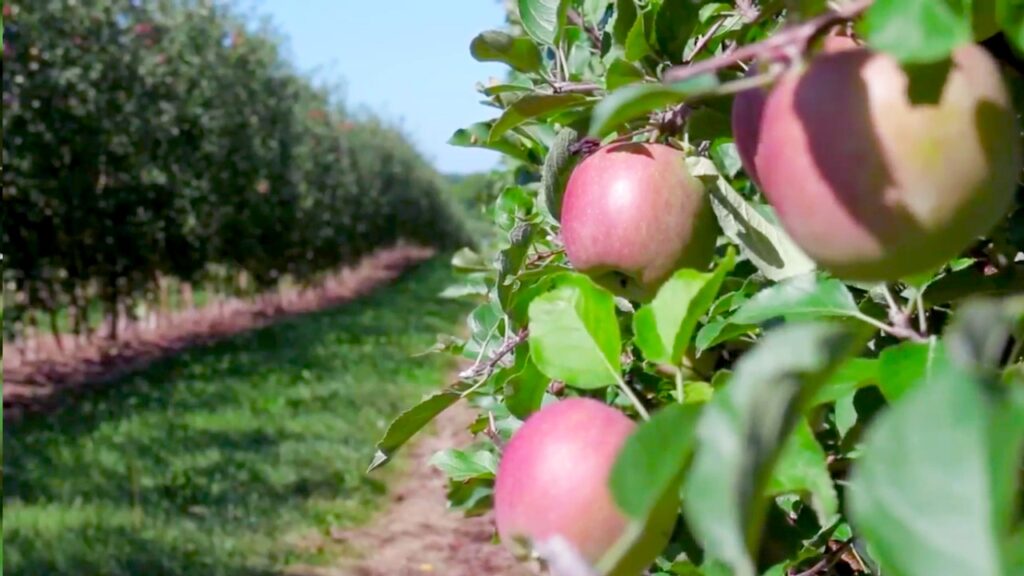
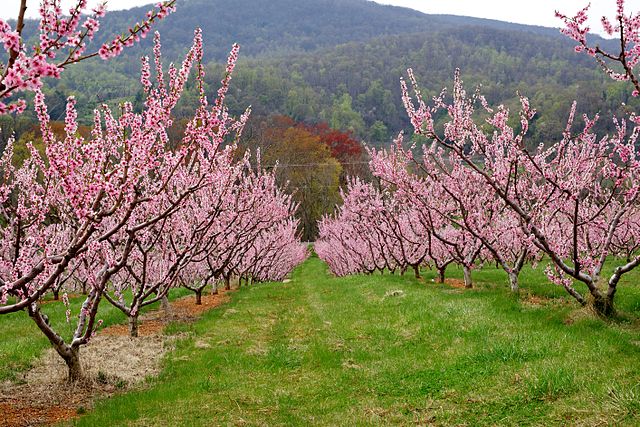
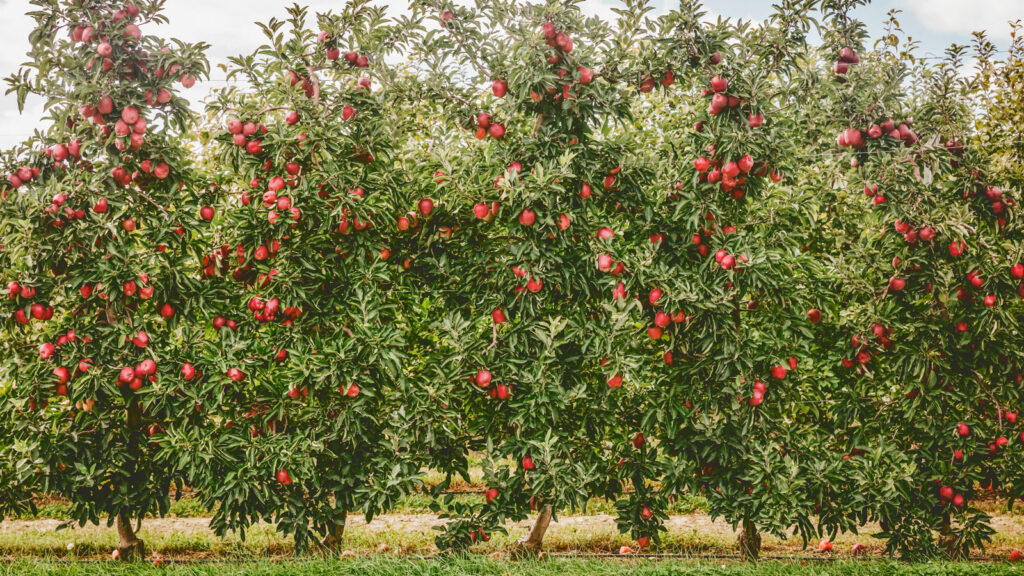
The multidisciplinary set-up of the project, which consists of entomologists, horticulturists, economists, and social scientists, strengthens the outcome of the project. Dr. Rivera said it is beneficial to have a lot of set expertise in federally funded projects that aim to create more information and help growers refine their growing programs by using Integrated Pest Management (IPM). She said that one of the benefits of interdisciplinary work is that researchers are quicker to apply the information when they have sociologists to work with because it requires a lot of interaction with people inside and outside the field being explored. She said the different experts’ interests help build strong outcomes of the project. She also talked about the role of extension in the project, transferring findings of the project back to growers to increase confidence adopting IPM.
Dr. Blaauw mentioned that the East Coast of the United States experiences more pest problems than the West. He noted that California is the leading producer of peaches in the nation. Since California grows peaches in desert-like conditions with low humidity and minimal rainfall, it faces fewer pest issues. However, the East Coast’s high humidity and other factors lead to increased pest challenges. He pointed out that in the Southeast, a major pest affecting peaches is the Plum curculio, which reduces fruit marketability. “The Plum curculio is just a tiny little weevil that lays its eggs in the fruit, and then it hatches, and the larvae feed on the fruit from the inside, which makes the fruit gross, pretty unmarketable. So that becomes a pretty big issue for us in terms of our management.” He further explained that while the pest is harmless when eaten, its appearance makes people avoid that type of fruit over time because they find it gross.
Using technology like smart traps could give researchers more accuracy in understanding timing through pest management models and make their work easier, as it allows them to check insect traps that can take photos every hour, compared to traditional ones that can only be checked once a week. Dr. Rivera discussed the future of IPM in relation to technology. She mentioned that while some areas already use certain technologies, she expects such tools to become common. She explained that one of the fastest ways to incorporate Artificial Intelligence (AI) in agriculture would be to have a tool that serves as a database of pesticide labels, which could be turned into a chatbot similar to a large language model. This chatbot would allow users to specify their State in the U.S. and recommend labels for review. She noted that although some might see such technology as overstepping, it could also be viewed as a helpful tool for gathering ideas and making comparisons. “So if an AI model is recommending this, we can try that in the field and further refine those recommendations. So, I don’t like to think of these things as in contest. I really think that in the end, all of these things will work together. And it’s not going to replace people going into the field work. At least, not for the foreseeable future,” she said.
Although the program has four main objectives, Dr. Blaauw emphasized that the primary aim is to enhance resilience in Eastern tree fruit production. The project will develop strategies for monitoring and improving the management of key pests, as well as broaden growers’ knowledge of various pests affecting apples and peaches. “We are targeting specific pests across the East Coast that are already considered relatively difficult to manage, and so when we can help growers improve management efficacy or at least reduce the cost of managing these insects and also incorporate some of these tactics into their current management programs, I would consider that a success,” he said.
Listen to the full conversation, learn more about apples and peaches and the things that bug them, with Dennis, Dr. Blaauw and Dr. Rivera on episode 11 of the Agricurious podcast.
