Jennifer Jo Thompson, PhD
Trained as sociocultural and medical anthropologist (University of Arizona, 2010), Dr. Thompson’s work is situated at the intersection of science, health, and food systems — and aims to engage with policy and justice along these lines. She studies risk perception, public engagement with science, and trust in scientific and other forms of expertise.
Dr. Thompson directs ethnographic and mixed-methods social science research projects that focus on community food systems and sustainable agriculture.
Dr. Thompson is the Director of UGA’s Sustainable Food Systems Initiative.
Publications via Google Scholar
Lauren Hunt, PhD
Lauren is a Postdoctoral Associate working with Dr. Meredith Niles at the University of Vermont and in collaboration with Dr. Thompson at the University of Georgia to research agricultural decision-making and behavior in the context of climate change. She is working with the Precision Sustainable Agriculture program, a collaborative effort aimed at understanding cover crop adoption and management, to investigate how farmers and researchers experience and perceive cover crop adoption. She also is working to examine climate impacts, as well as adaptation and mitigation within the dairy industry. She employs mixed-methods research and mapping techniques to support sustainable and climate resilient communities and agroecosystems.
Nicole Nunoo, PhD
Dr. Nicole Nunoo is a Postdoctoral Associate and a trans-interdisciplinary social scientist whose integrated work focuses on building sustainable regional and national food systems through grassroots participation. Her current research utilizes collective agency theory, which provides suggestive research directions for understanding regional and national agri-food networks as well as sustainable food systems, particularly among grassroots organizations. As a food systems scholar, her interest centers on frameworks such as collective agency from a multi-sector coalition-building perspective, as well as critical pedagogy for sustainable food futures. She comes from Ghana and enjoys designing lights, reading, and cooking.
Sam Olvey
Sam is an undergraduate student pursuing studies in Anthropology and Agriculture Communications, with a minor in Environmental Law at the University of Georgia. During her time at UGA, Sam has served as a sustainability certificate ambassador, community coordinator for the Athens Farmers Market, and archival assistant at CAIS. Through her role as a student research assistant, she gets to explore her interests in food systems and the interactions of people and the environment.

Cydney K. Seigerman, PhD
Cydney (they/she) is a Postdoctoral Fellow researching the human dimensions of climate smart agricultural practices across different ecoregions along the Cotton Belt and in the state of Idaho. In their work, they build on their interdisciplinary training to integrate methods across the critical social sciences, the natural sciences, and performance/theatre to examine the relationships among people, technologies, and the environment. Cydney earned their B.S. Chem from the University of Michigan in 2013. They then relocated to Madrid, Spain, where they worked as a Fulbright English Teaching Assistant and studied professional acting at La Escuela de Teatro La Lavandería. They earned their Ph.D. in Integrative Conservation (ICON) and Anthropology from the University of Georgia in May 2024. In their work, Cydney centers equity and justice to contribute to integrative approaches toward sustainable socioecological futures.


Bryn Watkins, MS
Bryn (she/her) is a doctoral student exploring how farmers navigate the tension between financial coercion and environmental necessity on a climate changing planet. Her previous research investigated the impact of the economic growth imperative on both commodity producers and smallholders in the Intermountain West, where dwindling water resources threaten human and more-than-human communities. She draws on qualitative interview methods to examine climate adaptation, food security, and embeddedness in the context of the unfolding polycrisis. Bryn believes that an ethnographic approach best amplifies the lived experiences of those most responsible for stewarding land and food systems through this unprecedented moment. She is a 2025 Presidential Graduate Fellow.
LAB ALUMNI
Whitney Barr, MLA
Whitney is the Food Studies Program and Garden Manager at Spelman College. She is co-PI on a joint UGA/Spelman USDA Higher Education Challenge Grant. In 2021, Whitney graduated from the Master of Landscape Architecture program at UGA. Her thesis intersects the art of agriculture and landscape architecture for (re)building, healing, and feeding Black and Brown communities. She is a native of Columbia, SC, and holds a BA in English Language and Literature from Spelman College.
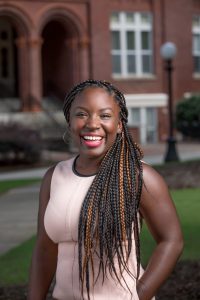
JoHannah Biang, PhD
JoHannah is the Horticulture Manager at Hills & Dales Estate. As a PhD student, JoHannah examined the impact of campus farms on the students who work and learn there. JoHannah also has a B.S. and M.S. degree in Horticulture from the University of Georgia and is passionate about teaching students how to farm organically through service-learning and experiential learning opportunities.
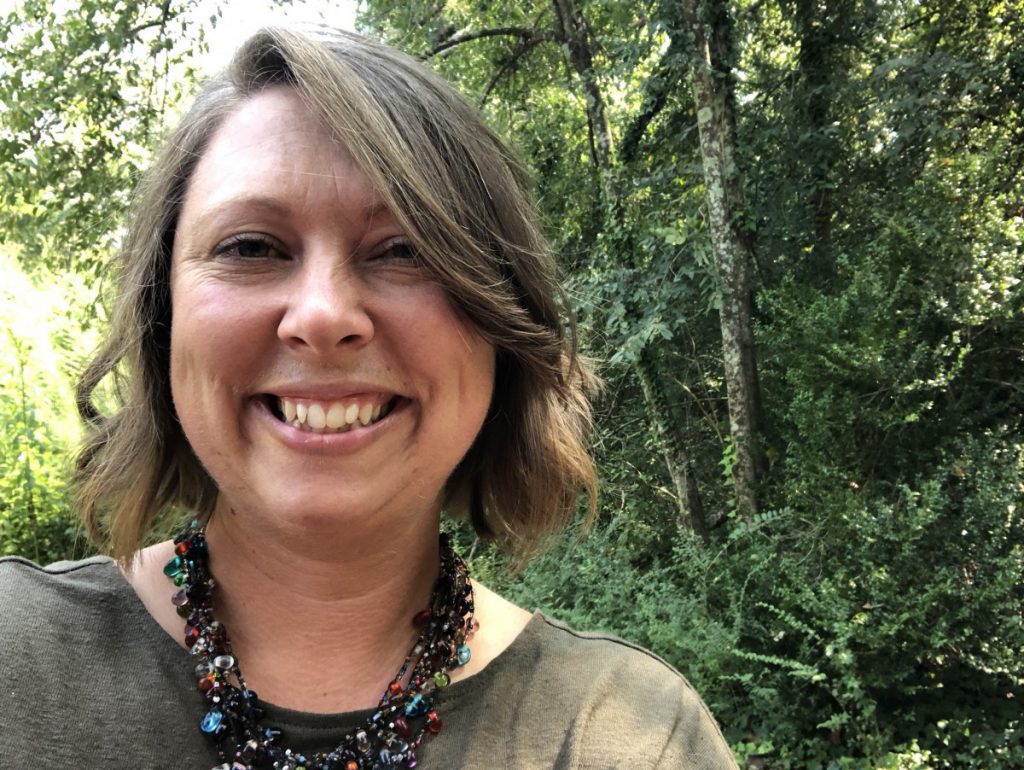
Andie Bisceglia, MS
Andie is a program assistant for the Bailey College of the Environment at Wesleyan University, where she assists with Wesleyan’s student sustainability & food justice programs, public events, and the environmental studies major program. Prior to being at Wesleyan, Andie served as Campus Kitchen Coordinator for 5 years and coordinated the Grow It Know It teacher training program. She completed her masters degree at UGA through the USDA National Needs Graduate Fellowship Grant (NNF) program in May 2018, researching school gardens. Prior to her masters work, Andie worked as an environmental educator and farm apprentice at a variety of farms, outdoor education centers, community gardens, and botanical gardens on the east coast.
June Brawner, PhD
June is Senior Policy Adviser for Data and Digital Technologies at The Royal Society (London), working at the intersection of data ethics, science and technology studies, and governance. Her work examines the social life of data and the ways data practices shape knowledge, power, and equity across scientific and public policy domains. Trained in anthropology and soil science, her graduate research examined identity, politics, and ‘terroir’ in Hungarian winemaking.

Raine Cox, MS
Raine is a policy researcher, and community advocate dedicated to equity and social justice. She serves as a Policy Research Graduate Assistant with the Belmont Policy Group at the University of Georgia. As an undergraduate student, Raine spent many years researching human rights, human rights policy, and global policy trends in Europe and Western Asia. Domestically, she studied Indigenous, African American, and Hispanic histories and their relation to current inequities. As a graduate student she has worked to formulate policy initiatives for a more sustainable society, most especially through the domains of agriculture, education, and health policy.

Abigail Darwin, MS
Abigail Darwin completed her BS in Health Promotions and her MS in Crop and Soil Science, supported by the USDA National Needs Graduate Fellowship Grant (NNF). Abigail has filled a variety of roles within the local food system, most recently as the Director of Programs at Wholesome Wave Georgia, where she works to make fresh, healthy, locally grown foods affordable and available to all Georgians.
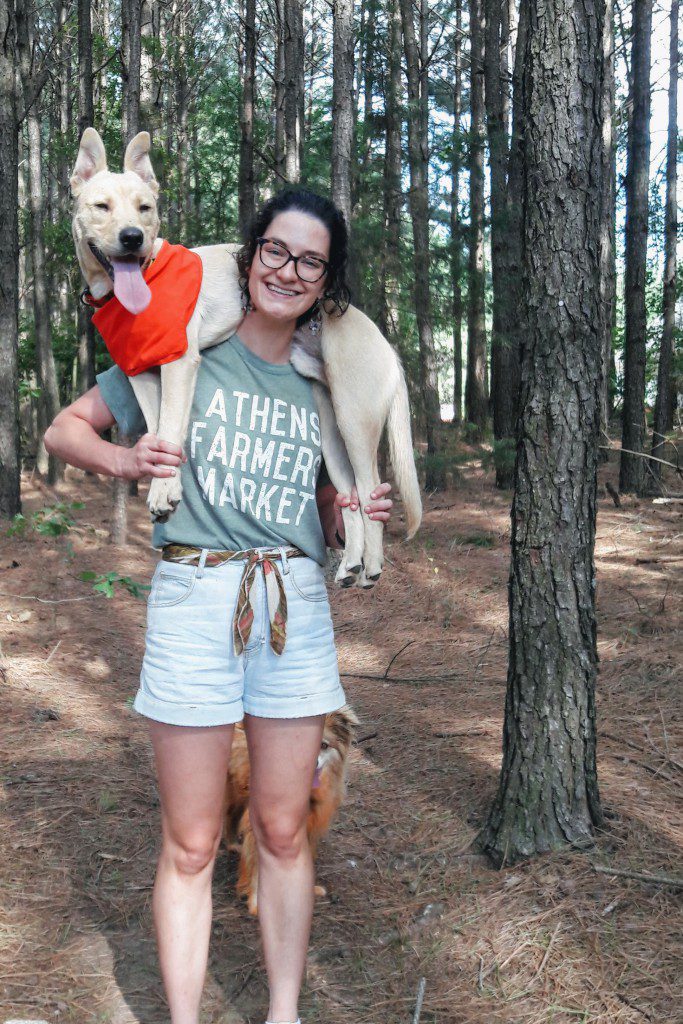
Kristen Dunning, MBA
Kristen is finishing her MBA at UGA. She holds a BS from UGA in Agricultural Communication, with a minor in Horticulture. Her passions include community gardening, soil health, herbalism, and uprooting racism in agricultural systems. During her time as an undergrad at UGA, she has filled many roles such as CAES ambassador, MANRRS president, SGA representative, and UGA Young Scholar. Furthermore, she brings her love for plants to life in her award-winning herbal skincare brand, Gently.
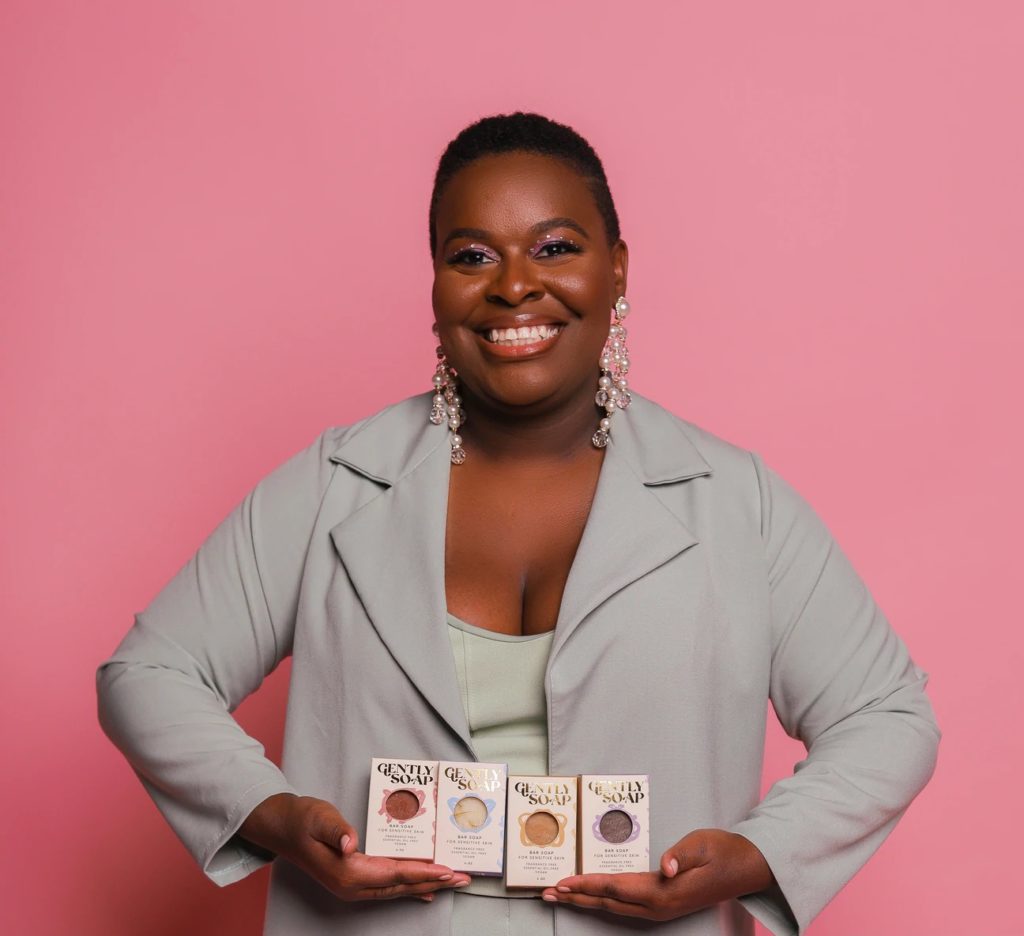
Charlie Evans, MS
Charlie completed her MS in 2022 and is currently Extension Program Coordinator in Food Science and Technology at UGA. Her MS research focused on teacher professional development in environmental education.
Joel Kirksey, MS
Joel is the Food Access Coordinator at California State University, Bakersfield, where he oversees the campus Edible Garden, Food Pantry, and Community Food Distributions. In addition, he serves as a part-time lecturer, teaching students about Small-Scale Agricultural Production.

Michaela Lubbers, MS
Michaela is an MS student in Crop and Soil Sciences and the IPM & Sustainability Communications Specialist at the UGA Center for Invasive Species and Ecosystem Health (Bugwood). Working in the intersection of sustainable ag, technology, and people, she is enthusiastic about making science useful and usable in the field. She is working with the Precision Sustainable Agriculture (PSA) program, a multi-state, transdisciplinary collaboration focused on improved cover crop adoption and management. Her aim is to co-develop a participatory design process for decision support tools (DSTs), ensuring that farmers’ needs and wants are met with these tools.
Michaela received her B.S. in Applied Biotechnology in Plant Science from UGA in 2020, along with a minor in Environmental Law. After working with the Bugwood Center during her undergrad years, she joined full-time as the IPM & Sustainability Communications Specialist. She wears many hats in this role and loves pulling together agriculture and natural resources, technology, extension and education, web design, and project management.
Folasade Olaoye, MPH
Sade currently serves as the Food Supply Chain Transformation Coordinator at Health Care Without Harm / Practice Greenhealth, where she helps hospitals and health systems use their purchasing power to advance equity and sustainability through values-based food procurement. Grounded in an MPH with a Sustainable Food Systems certificate, she brings a justice-centered, interdisciplinary approach to support food is medicine initiatives, cross-sector partnerships, and sourcing practices that prioritize community health and environmental resilience.
Melissa Ray, MS
Melissa completed her M.S. at UGA’s Warnell School of Forestry and Natural Resources with a focus in human dimensions and environmental education. During that time, she served as the Graduate Assistant to the UGA Sustainability Certificate program, where her research explored sustainability learning outcomes, community-based pedagogy, and the impact of interdisciplinary sustainability education programs in higher ed. Melissa also received her B.A. in Environmental Science and Anthropology at Emory University in Atlanta, Georgia.
Presently, Melissa is applying her expertise to public policy and advocacy work in her hometown of Chattanooga, Tennessee. In 2025, she co-founded a grassroots nonprofit dedicated to protecting public parkland through education, advocacy, and community activation. Her additional interests include Native North American ethnobotany, medicinal herbs, farming, and cooking and eating with the people she loves.
Maria Teresa Tancredi, PhD
Originally from Central Italy, Maria Teresa now works for the Conservation Technology Information Center (CTIC) as their Minnesota Soil Health Specialist. During her Ph.D., Maria Teresa investigated row crop farmers’ worldviews on commodity agriculture and cover crops. She also researched women farmers’ lived experiences and understanding of the “farmer” identity. Her research focused on the U.S. Northeast, South, and Midwest. Maria Teresa also holds a B.S. in Environmental Sciences from the University of Padova (Italy) and a Dual M.S. in Sustainable Agriculture and Crop and Soil Sciences from the University of Padova (Italy) and the University of Georgia.
David Weisberger, PhD
David completed his PhD in 2022, and is currently a Research Associate at the University of Rhode Island. Co-advised by Dr. Thompson and Dr. Nicholas Basinger, his PhD research focused on both biophysical and social dynamics of integrated weed management systems. He examined the effect of annual and perennial cover crops on Palmer amaranth suppression, and explored stakeholder perceptions on the management of this weed in Georgia through a USDA Sustainable Agriculture Research and Education (SARE) funded grant.